English
 Dutch
Dutch Japanese
 Hindi
Hindi Italian
 Spanish
 French
 German
 Chinese
 Korean
 Arabic
 Hebrew
 Russian
 Portuguese
 Danish
 Czech
Czech Polish
 Swedish

Need help?
 +977 9767994912


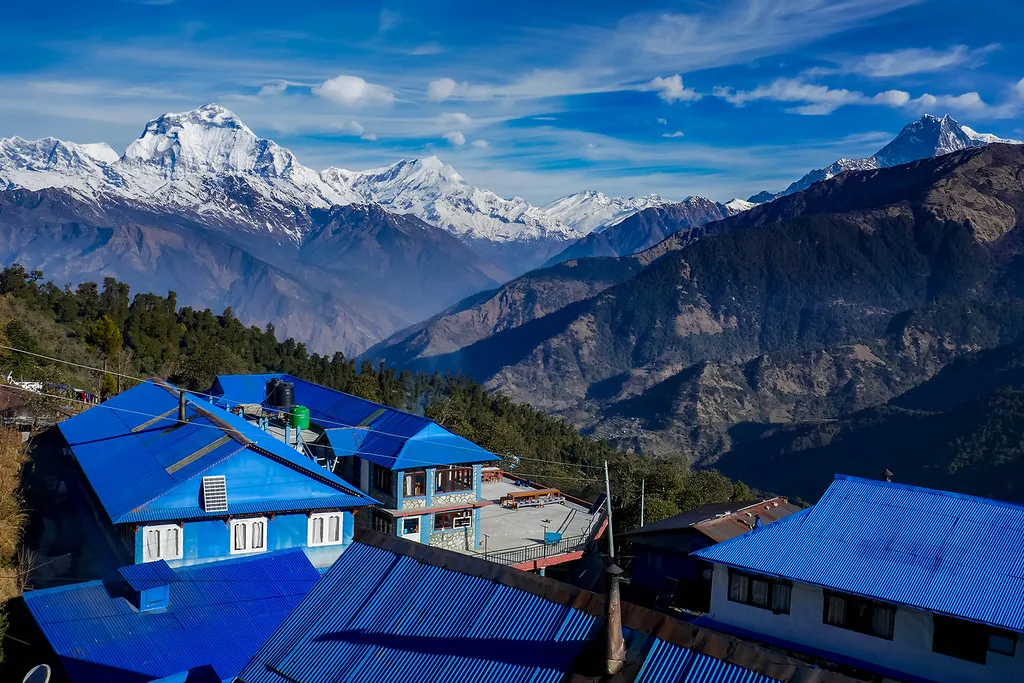
The Annapurna region in Nepal has various trekking routes, including the Annapurna Circuit and Annapurna Base Camp (ABC). These trekking routes are well known for the beautiful Himalayan views and rich cultural immersion. Trekking in the Annapurna region may last from 12 to 22 days, which will take you through diverse terrain and vegetation from subtropical forests to high-altitude mountains.
Teahouses in the Annapurna region are the primary source of accommodation. These places offer you comfortable resting places along the trekking routes. Teahouses along the trails are run by families, and they provide basic but comfortable accommodations and local meals. Each teahouse is quite different from the next, creating a sense of hospitality and cultural exchange within the remote mountain villages.
This blog will provide information for trekkers regarding food, rooms, and amenities in Annapurna teahouses. You will get simple sharing accommodations with meals containing traditional dal bhat. Teahouses provide a unique trekking experience through the warm hospitality of locals.
Regardless of whether you are a novice or seasoned trekker, learning about the environment in a teahouse will help you form reasonable expectations. This blog aims to help you prepare for the accommodations, food, as well as cultural experience that will be your Annapurna adventure.
Teahouses are family-owned guesthouses along Nepali trekking routes that provide trekkers with basic lodging and food so that they won’t have to carry camping equipment. Teahouses are simple stops along the trekking route with a sleeping area, kitchen, dining room, and bathroom facilities.
The main distinction between teahouses, lodges, and homestays is the purpose and the condition of facilities. Teahouses serve trekkers primarily for basic lodging and food, while lodges may be bigger and better developed, and homestays consist of sharing the home of a local family for cultural immersion, but their services are often less tourist-focused.
Teahouses are generally established at different elevations along popular trekking routes. In the lower elevations, teahouses have private sleeping rooms and western-style bathrooms. In the higher elevations, housing is much more basic, facilities may involve shared dormitory sleeping arrangements, and squat-type toilet facilities.
Teahouses provide invaluable support for trekkers with the basic economic advantages of lodging, inexpensive food, and a way to experience different aspects of Nepali culture. As with all parts of Nepali travel, the price and quality of the teahouses are very much based on the relative success of the trail; some teahouses are ply board huts and others are well-equipped guest houses.
Accommodation in Annapurna teahouses offers shared rooms that consist of a wooden bed and thin mattresses. Blanket and pillow will be provided, but you need to bring a sleeping bag for extra warmth.
Typically, toilets are basic and shared, generally squat rather than Western-style. Showers are cold by default, but you can get hot showers for an extra charge. Heating is typically only available in common dining areas warmed by wood or dung stoves, while bedrooms will be unheated.
The teahouses operate in Annapurna provide blankets, but it is worthwhile carrying a quality sleeping bag as well, as it could be extremely cold at night at higher altitudes.
There are charging outlets, but they often have fees associated, charged either per hour or by device. Wi-Fi is provided in certain teahouses, usually for a fee and with slow or spotty connections.
The amount to stay in a teahouse varies greatly in Annapurna as accommodation costs are low in lower altitudes but increase as effectively as area altitude increases. The price in general is a reflection of remoteness and access difficulty.
In some locations, there is a “must-eat-where-you-sleep” policy, which is enforceable, meaning that if a trekker stops to sleep, they must buy a meal at the teahouse in which they sleep. This is a good way to support the local businesses, but it can also add to the trekker’s overall cost of trekking.
You will get porridge, Tibetan bread, eggs, pancakes, tea, and coffee for breakfast. For lunch, the teahouses serve Nepali staple food: Dal Bhat with multiple servings. You can also get dumplings, noodles, soups, pasta, and pizza on some menus.
Annapurna teahouses have both vegetarian and vegan-style food options. Meals like dal bhat consist of vegan ingredients and are rich in fiber, protein, and carbohydrates.
However, these meal options will be limited in higher elevations due to logistical issues.
For non-vegetarian meals, ask the owner if the meat is frozen or fresh. If it looks questionable, then it is best to avoid it due to health risks. It is better to stay on plant-based diet while trekking.
In teahouses, food costs increase as trekkers pass through each region within Annapurna. Prices per meal are graded against stuff that needs to be carried by porters to the higher altitude areas, and options are fewer due to distance and transport problems. Meals typically cost between $5 $15, with meal pricing becoming more expensive at the higher camps where food is limited.
Some teahouses in Annapurna have hot showers; however, they will usually cost extra. Most use a solar heating system, which is dependent on weather, as hot water may not be guaranteed on overcast or cool days.
Drinking water is usually sold either boiled or filtered to ensure it’s safe. Trekkers are encouraged to carry purification tablets and reusable water bottles, since there are refill stations on the routes, and refilling reduces plastic waste and keeps you hydrated.
In teahouses, guests can expect intermittent electricity, as load shedding is normal in remote areas. Many of the higher-altitude villages utilize solar energy, which will affect charging options and speeds, so bring a power bank as well.
Overall, teahouses in Annapurna will be functional, but will not be luxurious, to promote ecosystem functionality to meet trekkers’ essential needs within an extreme mountain habitat.
Teahouses offer fewer amenities and worse options at higher altitudes in the Annapurna region, so you should know that as you gain elevation, they will have more rudimentary facilities and limited options. It is up to you to have a little more preparation than normal and to be flexible with your choices.
Don’t forget your hand sanitizer and wet wipes to stay as clean as possible when trekking for health and hygiene reasons. To keep your stomach from acting up, eat cooked food and try to avoid raw fresh salads, in particular in trekking areas where sanitation is limited.
During the main trekking season (October-November and March-April), you should book your room in advance. It is likely okay to fall directly into a room without having booked anything beforehand during the non-high trekking season. Just remember, by getting an early start, you will have many options for places to stay.
If you are ready to face these challenges, then your treks will more likely go better than they would have otherwise. Being aware of how altitude affects you, practicing hygiene, and maneuvering accommodation during your Annapurna trek will keep you comfortable and healthy.
When staying in Annapurna teahouses, it is also important to practice some basic etiquette. Most importantly, in many places, when you enter a space where people live, you will have to take off your shoes. Honestly, this is something that can be helpful too because it shows respect towards the host and is a nice gesture to the other visitors at the teahouse.
It is normal to be exceedingly generous with tips for guides and porters since they are working hard and putting in all the effort. However, tips for teahouse staff are welcome but are not expected. Other than tipping, you could also show gratitude through encouraging words and kind actions.
Your experience will be better if you engage with your hosts in a friendly manner. In addition, knowing some basic phrases in Nepali such as, “Namaste” (hello) and “Dhanyabad” (thank you), can help you build rapport with your hosts and demonstrate your respect for their culture.
Overall, these etiquette and cultural practices will help you develop goodwill and a much greater engagement during your trek. Remaining designed and respectful to your host and all that is offered at the Annapurna teahouse is a fulfilling experience.
Teahouses in the Annapurna region are not just simple but also warm and friendly. They supply comfortable rest, food, and cultural connection for trekkers in the midst of amazing mountain scenery.
In order to be prepared well, you should pack warm clothes, a sleeping bag, hand sanitizer, and power banks. Also, be realistic about the limited facilities and changeable conditions, so that the trek will be smooth and enjoyable.