English
 Dutch
Dutch Japanese
 Hindi
Hindi Italian
 Spanish
 French
 German
 Chinese
 Korean
 Arabic
 Hebrew
 Russian
 Portuguese
 Danish
 Czech
Czech Polish
 Swedish
Need help?
 +977 9767994912


Trip Duration
17 Days
Trip Difficulty
Challenging
Max. Altitude
5,060m / 16,601ft.
Activity
Trekking
Destination
Nepal
Group Size
1-16 Pax
Accommodation
3 star Hotel
Meals
Breakfast, Lunch, Dinner

Need help?
Talk to trip expert
The Makalu Base Camp Trek is the closest to nature when it comes to the Himalayan trekking destinations. There is no other like it. Its neighboring destination Everest is full of infrastructure and modern services while the Makalu trek does not even offer lodges to sleep in. This is not to imply that the trek is horrible, in fact, it’s just the opposite. Despite the lack of basic necessities, the Makalu trek is one of the best trekking experiences in Nepal.
Located near the Everest region, this trekking destination is not that far from Everest but since it is less appealing to the masses, the trails are in pristine natural form. Everything from rivers to hills is in great shape, there are no villages or settlements which means people have not polluted anything in the vicinity.
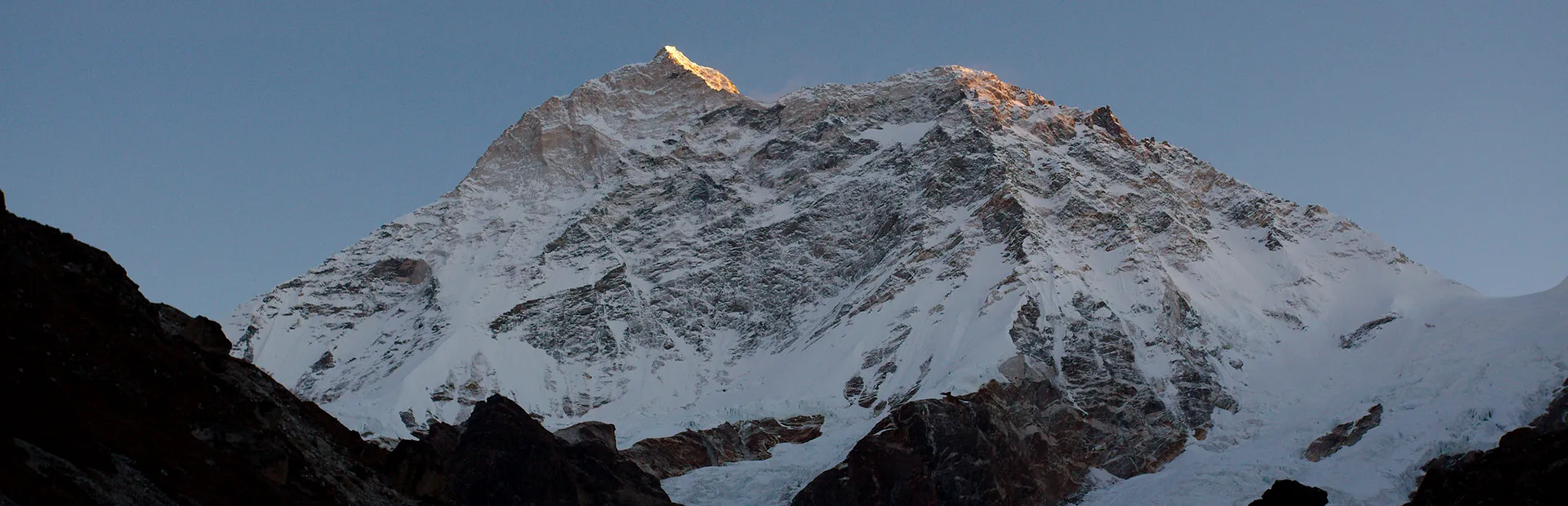
The Makalu Base Camp Trek takes you to a maximum altitude of 5060 meters while the peak itself scales much higher at 8585 meters above sea level. Given the close proximity to the Everest region, you will also be able to view peaks like Everest, Lhotse, Kanchenjunga, Manaslu, etc. at certain points of the trek.
While not for beginners, this trek is the perfect destination for experienced trekkers who are in search of a little challenge. In addition to the natural offerings, this trek is also a great opportunity to taste local Rai and Sherpa cuisines. Although you do not get to experience the daily lives of the locals, you will get to meet a few of them and have their local produce.
The Makalu Base Camp Trek is best done in the season of spring and autumn while you must avoid winter and monsoon. Let’s learn more about this trek to understand what you can expect from the experience.

Starting our first day of the Makalu Base Camp Trek we will get on a flight. From Kathmandu, there’s only one daily direct flight that connects to Tumlingtar. This flight lasts for 30 minutes and is covered by our 17 days Makalu base camp trek package. After that, we will get on a ride to Khadbari following the Koshi highway.
The city of Khadbari was once the fastest growing city in Nepal and is well connected to the Terai plains and high Himalayas via roadways. It is the trade hub of the region and the gateway to the Makalu Barun National Park and Mt. Makalu, the 5th highest peak on the planet.
Khadbari is a major town which means you can stock up on supplies here and we recommend you to do so.


Day 2 of the Makalu Base Camp Trek starts with a drive to Chichila. We will leave the city following the Koshi highway alongside farmlands to get to Chichila. The tarmac road soon ends and we follow a dirt road to Chichila village. From there, we get off the Jeep and get ready to hit the trekking trail.
From Chichila, the trail descends slightly and we reach Num in about 4 hours. The village sits atop a ridge overlooking the valley. The village offers great views of Mt. Jalajala, Hongko Chuli, Makalu, and Tutse. We will spend the night in Nm but you will have a couple of hours to explore the surrounding.
Today’s trek starts with a Sharp descent to the deepest valley on the planet, the Arun Valley (452 meters above sea level). Don’t worry, will not be reaching the bottom of the valley as it will be tough to regain all the altitude by ascending. We will cross some farmlands and a bridge over the Arun River (650 meters) to a downhill section of the Arun Valley, after we are done with that, the trail ascends back taking us to Runmura village. We will stop there for lunch or we can postpone it if you are not hungry enough.
From there, we ascend again up a windy trail that leads us to the entrance of Makalu Barun National Park. This is the village of Seduwa, a small settlement at 1493 meters above sea level. This village has a health post and a primary school as well which ceases to exist as you go higher into the Himalayas. All in all, it takes about 5 hours of trekking in total to reach Seduwa.
Most of the houses in the village have a tin roof while some of them have a hut roof and their walls are made of clay. These are the traditional houses of the region but given that blocks and tin are more effective against rain and wind, most people have upgraded.
Tashigaun is on the other side of the valley which sounds like a long day of walking but it is rather the shortest trekking day of the Makalu Base Camp Trek. The trail today is slightly windy as we have to descend down the hill and ascend up the other side to reach our destination. Passing through Bamboo and rhododendron forests, we will get to the other side where terraced farmland covers the slopes for a picturesque hillside scene.
Tashigaun is the last village of the 17 days Makalu base camp trek, from this point onward, we will not have the luxury to spend the night in villages until we return to Tashigaun a week later. The trek to Tashigaun (2507 meters) is only 4 hours long which means you will have plenty of time to walk around and explore the village to the fullest. This Sherpa village is different compared to Himalayan Sherpa villages as their main driving force is agriculture and trade which is very limited in the Himalayan region.
Today, we will gain over 1500 meters of altitude, so it’s a big trekking day. Passing through Rhododendrons, and Oaks forest we will start day 5 of the Makalu Base Camp Trek and leave the village of Tashi Gaun. As we get closer to the Khongma ridge, the treeline starts getting thin, and soon after we enter the Alpine treeline.
Following the ridgeline, we will slowly ascend the uphill sections to reach Khongma village after trekking for 5 hours approximately. From the village, you can see Mt. Kanchenjunga along with Makalu and many others in the distance. Our final altitude will be 3562 meters above sea level, you will surely notice the drop in temperature as the wind gets substantially chilly.
Since we have gained substantial altitude over the last day’s trek, it makes sense to have an acclimatization day right after. This rest day is crucial as your body must get the chance to adapt to the sudden change in temperature and altitude. The higher we climb, the less oxygen is present in the air so we must take it slow and steady to avoid the dangers of altitude sickness.
Starting our 7th day of the Makalu Base Camp Trek at 3562 meters above sea level, we will reach a max altitude of 4152 meters in today’s trek. The trek starts with an ascend to Shipton La pass (4125 meters) which is a great viewpoint offering views of Kanchenjunga, Makalu, and Tutse.
First off, we will ascend to Dandakharka from where the trail goes up and down to Sanopokhari. The name Sanopokhari translates to Small Pond. Continuing the trek, we will get to Thulopokhari which means Big Pond. The snow-covered trail can be confusing to follow which is why our guide will always lead the way while our porters will carry all your heavy loads.
From Shipton La, we will hike up to Keke La (4152 meters) before getting down to Dobate also known as Mumbuk. There is an open plain space full of tents beside which is a small building where food supplies are stored. After reaching Dobate, we are now officially in Barun Valley. Dobate is not a village, it’s just a random point in the middle of the Makalu Base Camp Trek itinerary which happens to store food, water, and other supplies.
Day 8 of the 17 days Makalu base camp trek is one of the hardest days of the trek thanks to steep ascents and descents. The trail starts with a slight ascent and we soon reach a landslide area which is marked on the map as well. Even though the trail is well forested, the area is marked as a landslide area because of the remaining debris of the last landslide.
Passing this area, we will reach rocky lands with huge chunks of rock dominating the scene. As we move out of this section, Peak 6 and 7 come into view. From there, the path descends into the Barun River, following the riverside path, we will soon reach the camping area of Yangle Kharka.
Barun Valley is a protected region within the Makalu Barun National Park area and is home to over 40 mammals and 700 different species of birds. The Barun Valley is home to rare species such as red pandas, snow leopards, jungle cats, musk deer, and more.
From Yangle Kharka, we will walk along the hilltop ridge to Ngne Kharka. From there, you will be able to see the Pravati Cave and Shiva Dhara. Continuing the trek we will reach Aamabhujung where we will stop for a quick break. After about 3 hours of trekking, we will reach Shiva Dhara which is a small pasture land dominated by towering rock cliffs.
From Shiva Dhara, we will reach Yak Kharka in about 2 more hours. We will set up camps for the night and cook dinner on a portable stove. Thus ends the 9th day of our 17 days Makalu base camp trek.
From Yak Kharka, we will continue ascending, passing a Chorten and Mani wall. We will soon be able to see the Barun Valley glacier. We slowly make our way to open plain land and see the south face of Mt. Makalu, Kali Himal, Chamlang, Makalu II and Baruntse. From there we will climb a hill to see the Khangsung (east) face of Makalu.
Reaching the highest altitude of the Makalu Base Camp Trek 5060 meters at the base camp, we will spend the night at a little lodge. Camping is not a viable option considering the harsh conditions of the Himalayas.
The following day, we will get to explore the base camp after having a warm breakfast on a cold morning. You can go around and take tons of photos, we also offer a short hike to Baruntse Base Camp which is a great addition to the 17 days Makalu base camp trek itinerary.
We will start our trek back to Yangle Kharka in the afternoon hours.
Day 12 of the Makalu Base Camp Trek takes us back to the alpine treeline as we reenter the Barun Valley vegetation. We will have to ascend a little to reach the camping grounds of Dobate. We will trek for about 5 hours today.
Today we will climb the Shipton La pass once again and make our way through Sanopokhari and Thulopokhari to reach our destination of the day Khongma camping grounds.
From Khongma we will first make our way to Tashi Gaun, entering the sub-alpine treeline. We will stop for lunch there before continuing the trek to Seduwa.
Day 15 of the Makalu Base Camp Trek is one of the easiest trekking days as the trail is descending and the distance is short. We will reach Num in about 6 hours.
From Num, we will reach Chichila in just 4 hours of easy trekking. Tumlingtar is an additional 4-hour drive away.
Day 17 is the last day of the Makalu Base Camp Trek, we will get you on a flight to Kathmandu after breakfast. Since there is only one flight per day, we do not have much wiggle room.

On the first day, we will get you on a flight to Tumlingtar which is about 30 minutes away from Kathmandu. After we reach Tumlingtar, we will get on a ride to Khandbari and stay there for the night. The following day, we will drive to Chichila town and trek to Num village shortly after. Khandbari is the last major town of the Makalu Base Camp Trek itinerary so make sure that you buy your must-haves.
On the 3rd day, we will finally trek to a remote hilly village named Seduwa. From there, we make our way to Tashi Gaun the next day, which is the last village of the entire trek. From that point, we will have to sleep inside tents with only a couple of lodges at the base camp.
The Makalu Base Camp Trek is graded as a “challenging” trek given the lengthy itinerary and the lack of basic infrastructure in the region. Trekkers have to spend almost a week sleeping in tents, there is no roof over their heads. There are a couple of buildings along the way that sell basic goods, other than that you are not going to find any signs of civilization.
The rugged sno-covered paths are also one of the factors that make this trek difficult. If you are not with an expert trek guide, you are likely to get lost. As you make your way up the chilly terrain, the oxygen content in the air decreases allowing room for altitude sickness. However, it’s not only hardships during your Makalu Base Camp Trek, you are also going to experience pristine natural scenes that have barely been influenced by human civilization.
The best seasons for 17 days Makalu base camp trek are those with less rain and more dryness. Seasons like spring and autumn are generally considered the best options since they offer the best views and overall moderate temperature throughout the day. Spring (March to May) offers mild day temps and as the snow melts away, the rivers come to life, the greenery of the hills brightens, and the flowers bloom vibrantly.
September to November is the autumn season in Nepal which is generally preferred for its clear skies, high visibility, and lack of rainfall. The weather steers clear and is more predictable than any other season. Autumn is also the festive season in the lower hilly region. You can experience the locals practicing their traditions or even be a part of it.
Winter, monsoon, and summer are generally not chosen to do the Makalu Base Camp Trek. The season of winter is extremely cold in the Himalayas and having to sleep inside a tent is just not that practical. Also, the winter snow makes the trail icy which tends to be slippery. Likewise, Monsoon is full of rain, making the trail slippery and full of mud. In addition to that, the visibility grows poor in cloudy and heavy rain conditions.
No, beginner trekkers should keep away from this trek as it is not suitable for them. Trekkers are required to sleep out on camping grounds, there is no sign of civilization for days, the environmental conditions are harsh, and the Makalu Base Camp Trek lasts for 17 days which is a long period for beginners.
A lot of beginners are not fully aware of the dangerous extent of altitude sickness, and what the proper preventive measures are. It can be taught easily but having experience is a must for this trek. The physical demands of the trek and the unpredictable weather are other factors that make this trek unsuitable for beginners.
For the majority of the Makalu Base Camp Trek, trekkers are below the 5000-meter range which is considered a safe elevation. While at the base camp, they are well above 5000 meters of altitude which could cause you altitude sickness, technically speaking. But since our trek guide will make sure that you follow all the preventive measures such as ascending at a steady pace, drinking enough water throughout the day, and checking your oxygen levels nightly, you are less likely to get altitude sickness.
In the rare chance that you get altitude sickness, our trek guide will contact the emergency rescue helicopter in severe cases, if it’s a normal case, you can literally walk it off by descending.
Altitude sickness is not something that affects certain people based on their physicality or any other factor, this sickness can hamper even the most experienced trekkers despite of age, sex, or physical fitness.
Accommodation is limited to camping tents for the majority of the trekking days since there are no lodges or inns after day 4 of the Makalu Base Camp Trek. When there are lodging options, we will sleep on comfortable beds within the walls of the lodges, protecting us from the cold outside. It’s only when you have to sleep in a tent for days that you start to appreciate even the most basic living facilities in the mountains.
There are teahouses near the base camp which are there to keep trekkers off from the cold, snowy grounds. The handful of tea houses spread throughout the itinerary offer local cuisine and the national dish of Dal Bhat. The local dishes include Momo, Thukpa, and different kinds of stew, you should definitely try them at least once. Having the local dishes and drinks is a part of exploring the remote region.
A warm tea of different flavors, coffee, or just warm water are the best options for drinks during your Makalu Base Camp Trek. You should stay away from alcoholic drinks for the entirety of the trek as they are dehydrating agents which is bad for altitude sickness.
Any kind of land and air transportation required as per the itinerary we have designed is managed by us and the expense is covered by the trek package. This includes air transportation to and from Tumlingtar, land transportation to Khandbari and Chichila, and the same way back at the end of the trek. We also provide free airport pick up and drop-offs.
The Makalu Barun National Park permit and the Makalu Rural Municipality Permit are the two permits required for the Makalu Base Camp Trek. Both of these trek permits are a part of the trek package which means you do not have to pay for them separately.
Endurance-building exercises focusing on cardio are the best way to prepare for the trek. This includes running, cycling, hiking, swimming, etc. Your primary focus should be on your lower body, your legs, and your thighs. Strengthening your leg muscles will help you glide through the rugged terrain of the Himalayas. Training your core is also a good way to prepare.
There are not a lot of options when it comes to alternative routes for the Makalu Base Camp trek. However, here’s one that you can work out.
Day 1: Kathmandu to Tumlingtar by air and drive to Num
Day 2: Trek from Num to Seduwa
Day 3: Trek from Seduwa to Tashi Gaon
Day 4: Trek from Tashi Gaon to Khongma Danda
Day 5: Acclimatization day at Khongma Danda
Day 6: Trek from Khongma Danda to Mumbuk via Shipton La Pass
Day 7: Trek from Mumbuk to Nehe Kharka
Day 8: Trek from Nehe Kharka to Shershon
Day 9: Trek from Shershon to Makalu Base Camp
Day 10: Rest and exploration at Makalu Base Camp
Day 11: Trek from Makalu Base Camp to Swiss Base Camp
Day 12: Trek from Swiss Base Camp to Sherpani Col Base Camp
Day 13: Trek from Cross Sherpani Col and West Col to Baruntse Base Camp
Day 14: Trek from Baruntse Base Camp to Amphu Laptsa Base Camp
Day 15: Trek from Cross Amphu Laptsa Pass to Chhukung (Everest region)
Day 16: Trek from Chhukung to Tengboche
Day 17: Trek from Tengboche to Namche Bazaar
Day 18: Trek from Namche Bazaar to Lukla
Day 19: Lukla to Kathmandu (flight)
Our Makalu Base Camp Trek is priced at USD _____ per head. Our trek package covers expenses such as wages to porters and guides, transportation costs, 3 meals per day, permit fees, accommodation expenses, and more. You should also carry a small amount of cash with you while going for a trek to the Himalayas as the remote villages we are visiting do not have ATMs or banks.
Internet is not available for the majority of the trek, you are lucky enough to find a tea house, the extra services are unheard of in the remote highlands of Nepal. Cell networks are also less likely to be dependable, the trek guide will have a satellite phone to call for help in case of emergencies. Gadgets charging is also an issue during the Makalu Base Camp Trek since there are literally no establishments from day 4 of the trek. However, you can charge your phones at the sparsely distributed tea houses along the way.
Since the trek package covers most of the expenses, there are not many things to spend money on. A few of them include your international flight to and from Kathmandu, emergency medical expenses, medical and travel insurance, tips for the crew members, extra meals and all kinds of beverages, add-ons, visa fees, and any other aspects that are not included in the package.
The Makalu Base Camp Trek is very different from the other trekking destinations in the same region. This trek is the rawest one you can go for, you will be closer to nature than ever since there are no settlements for days, and you will be sleeping on camping grounds. You will enter the Makalu Barun National Park which is home to hundreds of different native Himalayan animals and birds. You will also trek through the Barun Valley which is a nature lover’s paradise.
Given the closeness to nature, treading the trails is also difficult as you are on your own supplies. The remoteness of the trail boasts natural beauty but it also means no electricity and connectivity to the rest of the world. If you are someone who loves raw nature or someone who wants to experience untouched nature in its purest form, this Makalu Base Camp Trek is exactly the journey for you.
Flight to Tumlingtar is limited to one flight per day since there are not many people who wish to fly there. This creates a limited window for travelers which is why we also offer a helicopter ride to Tumlingtar. This private helicopter ride is much more flexible in terms of timing and the open doors and windows offer a more scenic flight.
This upgrade is exclusive of the 17 days Makalu base camp trek package.
Kathmandu is one of the most visited destinations of Nepal and given its stunning historic sites, we are not surprised. The valley of Kathmandu is full of intriguing sites that are hundreds of years old. The valley also boasts a number of interesting religious sites such as Pashupatinath temple, Monkey temple (Bouddhanath), Swaymabhunath, and more. If you are interested in a day sightseeing tour around the valley of Kathmandu, we will be more than happy to show you around.
The sightseeing tour will last for 5 to 6 hours, we will provide you with a tour guide, and a private vehicle with a driver. Any tickets or meals must be paid for on your own, we do not cover that kind of expense. Our only service for sightseeing is providing the itinerary, the guide, and the vehicle with a driver. This additional sightseeing tour around Kathmandu is not a part of the Makalu Base Camp Trek.
Yes, guides and porters are very crucial for this trek since they are responsible for guiding you and helping you with your luggage. Our strong porters are capable of carrying the luggage of 3 trekkers at the same time.
No, there are no hidden costs. Everything we do is plain and transparent, your extra expenses are briefed to you during the booking phase and the inclusive expenses are covered by the trek package.
The biggest challenge would be trekking long hours, the extreme cold temperature, and the unavailability of basic infrastructures and services. Despite the challenges, this trek is full of adventure and experiences that will leave an impression.
Yes, the route is safe for solo travelers but some portions of the trekking trails are undefined and covered by snow which calls for an expert guide. In addition to that, visitors are legally not allowed to travel to protected areas such as National Park, without a licensed guide.
Yes, emergency rescue operations are available throughout the trek and they are dependable as well.
Basic things such as warm, thick socks, rugged trekking boots, a pair of thermal wear to capture the heat produced by your body, trekking gloves, beanie, sunglasses, trekking poles, and other things that you might use on the daily

Need help?
Talk to trip expert