English
 Dutch
Dutch Japanese
 Hindi
Hindi Italian
 Spanish
 French
 German
 Chinese
 Korean
 Arabic
 Hebrew
 Russian
 Portuguese
 Danish
 Czech
Czech Polish
 Swedish
Need help?
 +977 9767994912


Trip Duration
27 Days
Trip Difficulty
Challenging
Max. Altitude
6,812m / 22,349ft.
Activity
Trekking
Destination
Nepal
Group Size
1-16 Pax
Accommodation
3 star Hotel
Meals
Breakfast, Lunch, Dinner

Need help?
Talk to trip expert
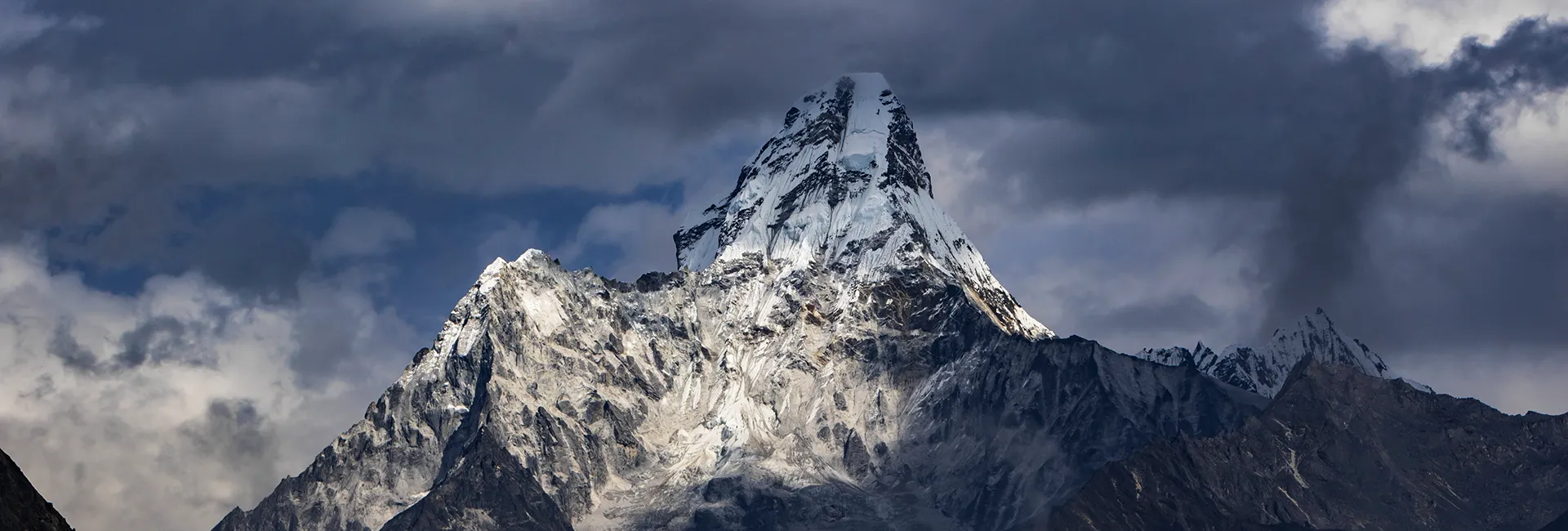
The Ama Dablam Expedition is one of the most thrilling and beautiful mountaineering experiences in Nepal. Ama Dablam looms large with looming ridges and a dramatic peak rising to 6,812 meters (22,494 feet) in the heart of the Khumbu.
The climb is technically demanding and an abode for the seasoned mountaineer, who must face rock, ice and mixed climbs before reaching the summit.
It starts in Kathmandu and includes a stunning flight to Lukla, then a trek through legendary Sherpa villages including Namche Bazaar, Tengboche, and Pangboche on the way to 4,600 meters at Base Camp.
The route follows the Southwest Ridge and entails ascent through steep rock faces, exposed ridges and icy slopes on fixed ropes. The breathtaking climb to some of the world’s highest peaks like Everest, Makulu and Lhotse are made more fulfilling.
To climb Ama Dablam Expedition is not just to climb a mountain, it is to take on the ultimate challenge of endurance, skill and determination. Successfully summiting is an unmatched feeling of accomplishment, as being on top of one of the world’s most beautiful and challenging peaks.
Ama Dablam Expedition provides an escape to beautiful Himalayan scenery and an insight into the Sherpa culture. Cultural and spiritual aspects of the trail are Namche Bazaar, Tengboche Monastery and Pangboche.
Trekking along the way you get stunning views of Everest, Lhotse and Makalu. An excellent experience for high-altitude mountaineering training, as it will help the climbers to prepare for higher peaks, such as Everest.
The climate is tough yet the landscape is serene and Sherpa’s hospitality is so warm as to impress. Ama Dablam Expedition is the ultimate trekking and mountaineering destination for those who are seeking adventure, technical climbing challenges and Himalayan beauty.

On landing at Tribhuvan International Airport Kathmandu, you will be received by the expedition team and transferred to the hotel. Once you settle in you will take some time to rest and recuperate. The expedition plan and the accompanying safety protocols will be briefed to the team.
Kathmandu, rich in history and culture, offers an exciting introduction to Nepal. You can explore the Thamel with its lively streets or nearby temples and markets. This is one day that is very important for mentally and physically more prepared to deal with the great adventure ahead. Sleep well as the coming days will bring a need for stamina and focus.


After breakfast, you will prepare for the actual trek. On the day, we will do a complete gear check, obtain the necessary permits and will meet the guides and Sherpa team. Then you will go on a guided city tour outside of Kathmandu, visiting some of the city’s UNESCO World Heritage Sites.
Wide views of the city can be enjoyed from Swayambhunath (Monkey Temple) and the spiritual roots of Nepal are bequeathed to its visitors by the deeply ancient Boudhanath Stupa and Pashupatinath Temple.
Thamel, the busy, main area of Kathmandu, is the place to go for last-minute supplies and souvenirs. It is a day when all logistics are fixed in order for an easy and successful expedition. Overnight, you will enjoy the team dinner, starting your adventure with the right attitude.
The true start of this adventure is an early morning flight to Lukla (2,840m). The Himalayan peaks are breathtaking from the 35-minute flight. Upon landing you will be met by the support team and will set off to Phakding.
The descent goes through dense pine and rhododendron forests which fly across several suspension bridges over the Dudh Koshi River. Phakding is a small Sherpa village with tea houses and mount lodges and you will reach it after around 8 to 9 hours of moderate trekking.
Once settled, you will have some free time in the village to acclimatize. This ambiance is set for the days to come with the fresh mountain air and stunning river views.
Crossing the trails and following the Sherpa settlements, the trek from Phakding to Namche Bazaar is a steady ascent. The climb gets steeper after crossing the Hillary Suspension Bridge. Along the way, closer views are had of Everest along with Lhotse, although the trail clings close to the Dudh Koshi River.
Trekking for about 6 hours, you’ll reach Namche Bazaar, the trade hub of the Khumbu area. There are plenty of shops, bakeries, and lodges for trekkers and climbers in Namche. The amphitheatric setting of the town provides an excellent vista of the surrounding peaks.
A hearty meal and a comfy lodge are required for you to recharge before continuing with the expedition.
It is important to acclimatize today at Namche Bazaar to avoid any altitude sickness problems. Start the day by taking a hike to the Everest View Hotel for spectacular vistas of Everest. Travel to the Sherpa Museum to explore the details of the local culture, history, and mountaineering traditions.
Charming cafes and shops in Namche Bazaar are well suited for relaxation and the peaceful mountain atmosphere. Another great view of the Himalayas can be found with a visit to the nearby Syangboche Airstrip.
Furthermore, interacting with local Sherpas will give you an insight into their highly resilient and spiritual lifestyle. Sip the local warm tea sitting with the breath taking Himalayan landscape all around you.
Today take time to relax, it takes your body a little time to adjust to the high altitude. Adequate hydration and rest will aid with acclimatization and retention of strength. It will allow you to take this rest day so that you are physically and mentally ready for what are bound to be very challenging days.
Today we continue to trek from Namche Bazaar towards Debuche to a stunning and troublesome trail. Dense rhododendron forests have to be walked through and accordingly, the trek has suspension bridges over the Dudh Koshi.
Passing Tengboche, visit the famous Tengboche Monastery where you will receive the spiritual blessing. It is breathtaking and uplifting to view the views of Everest, Lhotse, Ama Dablam, and Nuptse.
The pine forests leading up to the trail offer you the chance to see some of Himalayan wildlife species. The quiet village of Debuche is a serene place, and has some basic lodges for accommodation.
Relaxation and recovery are something you will do during the day because of the serene atmosphere coupled with crisp mountain air. The trek itself will take 5 to 6 hours depending on pace.
You need to rest well after a warm meal to recharge for the next difficult day. The climb tomorrow will take you deeper into more of the Everest region’s beauty and majesty.
After breakfast, leave Debuche and climb up along a thin track into the rugged trails to the village of Pheriche. You immerse yourself in different suspension bridges and views of soaring peaks while following the Imja River.
Pangboche, the highest permanent Sherpa settlement in the Everest region, could be passed through. The trek over today will be dominated by the striking presence of Ama Dablam. The trail is rocky and windswept higher up and you reach Pheriche at a higher elevation.
Pheriche is well known for its altitude research center and a few tea houses only. You take time to settle in and soak in the mountain views while enjoying the warm tea.
You will stay at Pheriche for an acclimatization day because your body needs time to adapt to extreme altitude. The first day in Nangkartshang Peak requires a brief hiking adventure toward the viewpoint.
The climb offers magnificent views of Makalu, Lhotse, Ama Dablam, and the surrounding peaks. We spend our time in Pheriche village for rest along with hydration and the chance to appreciate the beautiful surroundings and relaxing environment. Here you can interact with trekkers while hearing their mountaineering stories at this location.
Acclimatization day stands as critical for your health at high elevations and also determines your safety level during ascents into such heights. Your enhancing strength during this rest period will create better performance in the upcoming days.
The trail departing from Pheriche leads travelers to areas containing rocks and wind conditions. From alpine meadows, the path rises steadily past bare moraines until it reveals exceptional mountain prospects.
You must climb in front of the imposing Ama Dablam peak while passing across narrow ridges and small streams. The trek from the nearest road until reaching Base Camp requires about 5 to 6 hours of walking leading to the below-peak location.
A lively atmosphere characterizes the base camp where campers can find comfort alongside seasoned climbers. We take time to acclimatize as well as stay hydrated before the trek against mountain thin air and elevated altitude.
Your first breathtaking views of Everest, Lhotse along with various surrounding peaks can be witnessed from the base camp location.
Ama Dablam Expedition today has a technical ascent, but mostly we spend the day acclimatizing and preparing. We equip ourselves with gears and use ice axes, crampons, and harnesses on nearby ice and rock formations.
The aim is to gain confidence and improve your climbing so that you can make the technical sections that are yet to come successful. Planning a high-altitude climb means that you are going to prepare beforehand so that you are physically ready.
The day requires physical and mental preparation before the summit push of tomorrow’s. After a hearty meal and an early rest, you will be ready for the tough climb ahead.
After Base Camp, you start a steady climb to Camp 1 at the altitude of 5700m (18700ft). High-level rock scrambling with fixed rope climbing and narrow ridges. Tents fill up limited space in a narrow ledge on which camp 1 is perched.
The route between Camp 1 and Camp 2 (6,100m/20,013ft) becomes more technical, with steep rock and ice sections. The Yellow Tower, otherwise known as a vertical rock face, is infamous for requiring careful climbing and rock work.
Camp 2 is small, exposed, and with great views of the surrounding peaks. Climbing from Camp 2 to Camp 3 (6,400m/21,000ft) requires ice gullies and a hanging glacier. To get to Camp 3, you must negotiate through a vast ice shelf, and they need to carefully plan the final push.
We set off early with the summit attempt up steep ice and snow ridges towards the summit. The final part contains mixed rock and ice climbing, whose psychological demands are not to be underestimated.
From the summit, you have absolutely 360-degree views of Everest, Lhotse, Makalu and the Khumbu Valley. After admiring the views, the rapid descent is accomplished by weaving exposed ridges.
Technical downclimbing and crossing ice fields and crevasses are required before returning to Base Camp. The whole ascent and descent takes about two weeks, weather and conditions dependent.
Improvement in acclimatization is planned with rest days at higher camps and strategic rotations. On returning to Base Camp you will celebrate the incredible feat with the team.
So after Ama Dablam climbers descend from the Base Camp until the Namche Bazaar. But the return trip recaptures many of the old routes and gives a little relief while nostalgia is felt as pastures and picturesque villages are passed through.
Breathing and movement are also easier as they descend because the oxygen level increases however descent is easier than the ascent. Reaching Namche Bazaar, a short rest break gives trekkers a taste of the Sherpa town for the last time before heading to Lukla.
The last leg of the trek is a gradual downhill through beautiful forests and bridges (suspension bridges) across the Dudh Koshi River. It’s the end of the expedition and climbers head to Lukla, finally toasting the success of the expedition and swapping stories with their partners in exhaustion and camaraderie like any good adventure in the mountains will do.
We take an amazing flight departing from Lukla Airport to return to Kathmandu at dawn. The trip stays brief yet exhilarating since it provides your last view of these well-known Himalayas peaks.
Upon landing at Kathmandu, the climbers receive hotel transfer services before they start their relaxation period. Travelers during any day can enjoy complimentary access to shopping souvenirs combined with local food and hot shower services throughout the capital city.
We schedule a final dinner for climbers to present achievement certificates while climbers share their adventures with other fellow climbers. After completing the expedition all participants carry eternal memories of reaching Ama Dablam summit.


Ama Dablam Expedition is most successful when it takes place in the spring months of March through May as well as the autumn season between September and November. Highly stable weather conditions prevail together with clear skies during this period which makes it an ideal climbing season.
The warm spring season has blooming rhododendrons which makes spring trekking even better. The peak period for technical climbing operations delivers safe conditions through dry roads and clear skies alongside fresh air quality.
The climbing season prevents periods of excessive snow accumulation along with extreme chill and monsoon precipitations. The seasons create minimal weather disruptions because they offer extended daytime hours that ensure the greatest likelihood of performing a safe and successful climb on Ama Dablam.
Winter expeditions (December to February) on Ama Dablam are extremely challenging with cold temperatures, strong wind and icy conditions. While at higher altitudes, temperatures drop down to below -25°C (-13°F) and so it is difficult for survival, as well as for movement.
The region has heavy snowfall, chances for avalanches, and ice ridges which are dangerous for climbing. The route up Southwest Ridge involves more technical climbing because the rock formations and steps are frozen.
It is not generally recommended by most mountaineers but experienced trekkers can go for an adventurous trip. Winter expeditions are risky due to limited tea house services, unpredictable storms, and extremely cold exposure.
The heavy rainfall and landslides along with limited visibility make the Monsoon (June to August) an unfavorable time for the Ama Dablam Expedition. The dangerous conditions from the slippery trails alongside muddy paths make the paths treacherous and lead to greater possibilities of injuries and accidents.
The stunning appeal is reduced because clouds obscure all mountain viewpoints. The Southwest Ridge path suffers from a combination of risky technical ascent conditions because it includes slippery rocks and unstable mountain snow.
People experience unease because the lower elevations of the region host numerous leeches along with mosquitoes. Multiple tea houses function during treks but they only provide limited foods for customers to consume.
The trek requires continuous energy because of constant rain storms and unexpected atmospheric disturbances.
Managing the seasonal weather patterns is essential when climbing during the Ama Dablam Expedition. A minimum snow and cloud cover along with stable weather conditions dominate the seasons between March to May (spring) and September to November (autumn).
Base camp at 4,600 meters measures between -5°C and 10°C depending on afternoon conditions but summit temperatures reach as low as -20°C. Climbing operations during December through February prove to be the most challenging due to severe cold storms as well as blizzard-like conditions and deep snow accumulations.
Then, the trekking experience becomes hazardous during monsoon months too due to heavy rainfall and slippery conditions and low visibility on trails. Success during the expedition requires people to check weather predictions and buy appropriate equipment in preparation for unexpected temperature shifts.
The Ama Dablam expedition demands advanced expertise for performing rock climbing as well as ice and mixed climbing techniques. The Southwest Ridge presents steep rock faces together with exposed ridges to its participants.
Climbers must navigate the expedition by using fixed ropes while they ascend vertical ice sections and traverse over high-altitude territory. Near vertical walls on the way to Camp 2 from Camp 3 present the most demanding technical rock climbing conditions.
Those climbing above the 5,000-meter altitude encounter such low oxygen availability that physical exertion becomes exceptionally demanding. Prior 6,000-meter peak experience is recommended.
Excellent mental resilience and multiple advanced skills combined with exceptional endurance are essential for this expedition. Your opportunities to reach the summit improve when you receive proper training and get adequate exposure to altitude but always seek guidance from someone who knows better.
Technical climbing on the Ama Dablam Expedition involves difficult requirements that need trekkers to possess excellent fitness together with strong endurance and impressive strength.
The preparation period for cardio training together with strength exercises and altitude adaptation should start 6 months to 1 year ahead of the expedition. The practice of running, cycling, stair climbing as well as swimming builds stamina needed for high-altitude trekking.
The primary reasons for strength training for climbers are to support challenging slopes and manage their carrying equipment weight. The training improves our skill level when using rappelling techniques with fixed ropes and ice axes.
The training program will include mental resilience building for climbers’ adaptability to extreme situations. Safety along with success in mountaineering requires proper planning by acquiring high-quality equipment with well-established hydration tactics and acclimatization protocols.
The Ama Dablam Expedition is exciting, but the challenging side of adventure demands careful preparation and awareness of certain things, such as safety and to ensure getting the most out of the adventure.
The main consideration for trekkers going above 5,000 meters is altitude sickness often referred to as Acute Mountain Sickness (AMS). Headaches, nausea, dizziness, and difficulty breathing are among the symptoms. Acclimatizing gradually and spending enough time at higher altitudes are the keys to minimizing the risk of AMS.
It is very important to hydrate, and 4 to 5 liters of water per day will reduce the chance of getting AMS. In addition, alcohol, smoking, and even strenuous physical activity should be avoided to avoid oxygen from being compromised.
It helps better adapt to high altitudes in that “climb high, sleep low” principle. In such cases where symptoms worsen, the safest option to prevent life-threatening conditions such as High Altitude Pulmonary Edema (HAPE) or High Altitude Cerebral Edema (HACE) is to immediately descend.
Travelers on the Ama Dablam Expedition can find standard accommodations at tea houses which provide sleeping arrangements with blankets and communal bathroom facilities for two people in each room. The higher-altitude lodges feature bathrooms with showers although lower-altitude spaces provide rooms with less comfort.
The traditional food offers village flavors composed of dal bhat (rice with lentils) along with noodles and soup and pasta with Tibetan bread. The breakfast meal consists of porridge alongside pancakes and eggs together with tea.
The elevation increase leads to higher food expenses because of the difficulties in commuting supplies. People can use high-energy protein bars as nutritional supplements between usual meals. Sherpa traditional hospitality maintains an embracing reception across every part of the trek.
The Ama Dablam Expedition requires the intake of a lot of water and trekkers should be nonetheless careful of the kind of water they take in.
Boiled water is supplied in tea houses but the cost is greater at the higher heights. As such, their natural water sources, such as rivers and streams, must be developed by using purification tablets or filters for safety purposes.
It is discouraged to purchase bottled water for minimal waste, and trekkers are recommended to bring reusable water bottles or hydration bladders. In addition, drinking water also counts, as well as warm drinks such as tea or soup, which are important for keeping body temperature in the cold.
Preventing dehydration at high altitudes is essential, so drinking at least 4 liters of water per day helps to ensure maximum performance.
The Ama Dablam Expedition is not only a trail of amazing beauties of lands, peaks, and wildlife, but it is also a trail of cultural experience. On the route, trekkers are exposed to the prayer flags, mani walls, and the ancient monasteries that present a brief of the spiritual and cultural life of the Sherpa people.
Spiritual blessings are provided to trekkers on the visit to the largest Monastery in the Everest region Tengboche Monastery. The complete trail showcases the traditional Sherpa lifestyle and yaks herding while passing through remote Sherpa villages with their population engaged in agriculture.
Trekkers can also learn about mountaineering history in the region from interaction with Sherpa, their hospitality and traditional cuisines like butter tea. Further to enhance the cultural experience of the trek are local festivals such as Mani Rimdu, which features masked dances, rituals, and ceremonies of chanting.
Ama Dablam checks it all, being located in the Khumbu region, it is well known for its diversity in wildlife and stunning natural beauty. Rhododendron forests, alpine meadows and rocky moraines lie between Everest, Lhotse, Makalu and other towering peaks that trekkers pass through.
Rare animals such as musk deer, Himalayan tahr and snow leopards thrive here while birds like Himalayan monal, eagles, and vultures soar in the region. The area also has dramatic landscapes with a trek that is further added to by the Dudh Koshi River and hanging glaciers.
Its scenery changes with seasons, every season has its beauty with its own experiences of serene landscape at its own beauty, or mountain views.
To start the Ama Dablam Expedition, the trekker needs to get in contact with Nepal’s tourism authorities to secure some crucial permits. One of them is the Sagarmatha National Park Entry Permit, going for around $30 per person and Khumbu Pasang Lhamu Rural Municipality Permit which is about $20.
Their function is to support conservation, local communities and maintenance of trekking routes. These permits should be carried by trekkers and can be required to be present at trek checkpoints along the trail.
The permits can be arranged by yourself to start the expedition, but it is suggested that these permits be arranged with the help of a reputable trekking agency.
Ama Dablam Expedition demands must have travel insurance to evoke emergency helicopter evacuation, medical expenses and trip cancellations. The policy should also provide coverage for high-altitude trekking above 6,000 meters.
Trekkers should make sure to bring a well-equipped first aid kit, altitude sickness medication and phone numbers of said contacts. Experienced guides and porters are hired to make the hike more safe and smoother.
It is also important to remain informed regarding weather forecasts, acclimate according to schedule and heed the advice of guides. Comfort and survival during the trek require appropriate clothing layers and a good measure of hydration, along with proper mountaineering gear. Gaining mental and physical preparedness for the trek is of utmost importance.
Ama Dablam expeditions cost ranges from $4,500 to $10,000 based on the operator selection along with service package details and guide and porter requirements and desired luxury features.
Previous trekking and technical climbing at high altitudes serve as recommendations but are not essential. The climbing area holds challenging conditions that require proper abilities to protect oneself while attaining the summit.
The regular duration of the expedition spans eighteen to twenty days considering acclimatization and rest phases. It takes between 8 to 12 hours moving at 3 to 4 hours per 1.000m to reach the summit starting from Base Camp.
The tentative weight you will carry along with water, food and additional clothing needs amounts to between 8 to 12 kg. Travelers can buy supplementary equipment from Porters yet they must handle their own personal possessions.
Any person can participate in the expedition unless their fitness level prohibits them from enduring strenuous hikes which typically require individuals from 18 to 60 years old.
A guide will examine you when you start feeling unwell. Bad health conditions will either lead to a descent recommendation or helicopter-based emergency evacuation.
Personal guides together with porters are accessible for hire since they provide assistance in navigation and safety functions and gear transport. Additional tools for support exist that reduce the intensity of hiking distances.
The procedure of moving patients to hospitals during emergencies requires helicopter transportation under specific weather and insurance policy conditions. Helicopter rescue prices differ between $2,000 and $7,000 based on both the operation location and time sensitivity.

Need help?
Talk to trip expert