English
 Dutch
Dutch Japanese
 Hindi
Hindi Italian
 Spanish
 French
 German
 Chinese
 Korean
 Arabic
 Hebrew
 Russian
 Portuguese
 Danish
 Czech
Czech Polish
 Swedish
Need help?
 +977 9767994912


Trip Duration
13 days
Trip Difficulty
Moderate
Max. Altitude
4,560m / 14,961ft.
Activity
Trekking
Destination
Nepal
Group Size
1-16 Pax
Accommodation
3 star Hotel
Meals
Breakfast, Lunch, Dinner

Need help?
Talk to trip expert
Nepal is the land of gods, high Himalayas, green hills, forests, and several trekking routes which are losing their authenticity due to mass tourism. However, we bring to you our one-of-a-kind Dudh Kunda Trek that will take you on a route that is far from the hiking Highways.
The Dudh Kunda trek is relatively new which intends to bring Nepal closer to you in all its originality and diversity. In fact, the Dudh Kunda trek route will take you through the lonely trail of the lower Solukhumbu region and through the homeland of Sherpas.
During this trek, you will have the opportunity to explore and stay at the ancient Thupten Chholing Monastery in Junbesi, and you can appreciate the distinctive Sherpa culture, their way of life, and the stunning landscapes.
Another remarkable characteristic of our Dudh Kunda trek 13 days journey is the breathtaking display of vibrant rhododendron forests, which bloom in a variety of colors during spring.
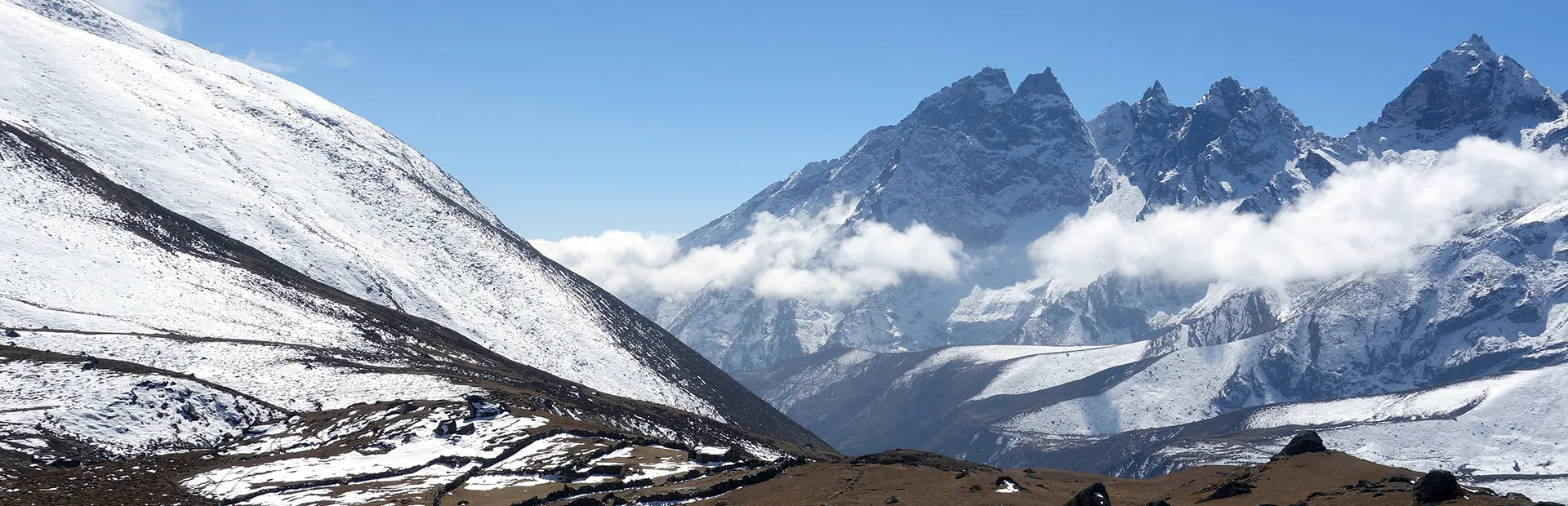
However, the highlight of the Dudh Kunda trek itinerary is the pious Dudh Kunda Lake itself, nestled beneath the Khatang (6582 m), Numbur (6958 m), and Karyolung (6511 m) peaks within the Sagarmatha National Park at 4600 m elevation.
The lake, known for its blue-tinted waters, translates to Lake of Milk and serves as a pilgrimage site for Hindus and Buddhists. Because, it is considered the residence of Lord Shiva, it has particular importance for Hindus.
During the full moon of August (Janai Purnima), when the sky weeps vigorously, the prayer and puja in the lake are regarded as the most fruitful that can abolish all the bad sins.
The lake is also an excellent spot to admire the grandeur of the Himalayan titans such as Himalchuli (7893 m), Manaslu (8163 m), and Dr. Harka Gurung (7871 m) peaks.
Our Dudh Kunda trek itinerary will first take you to Shivalaya via Jiri, where you will be on a typical Nepalese highway. You will then commence walking to Bhandar traversing the picturesque forests and quaint villages.
In the following days, you will continue your trek to Sete and then to Junbesi. You will then proceed to Thupten Chholing Monastery, followed by a trek to Yak Kharka. As you ascend into the alpine highlands of Solukhumbu, you will make your way to Dudh Kunda Lake.
After exploring the lake, you will descend towards Saharsbeni and then to Phaplu via Ringmu. Your Dudh Kunda trek will come to a conclusion with a flight from Phaplu to Kathmandu.
The Dudh Kunda trek route will reach a maximum elevation of 4600 m and requires moderate fitness but proves to be a very rewarding and fulfilling adventure even for beginners.
If you like to see the melted blue waters at Dudh Kunda, then autumn and spring would be the best most optimum time for our Dudh Kunda trek.

Welcome to the iconic capital of Kathmandu, the city that inspires imagination. After you pass through the TIA Gate, our representative will be there to assist you with your luggage loading and then he will drive you to your selected hotel.
Please take some time to rest and recover from the effects of jet lag. Once everyone on the Dudh Kunda trek are in the hotel, our guide will provide a brief explanation about our planned Dudh Kunda trek itinerary.
You can then venture out to know a little about the city and its unique dishes.


You will have a full day to know the stunning city of Kathmandu. Right after breakfast, our guide will collect you and lead you to the UNESCO monumental sites of the city such as the most important Hindu site of Pashupatinath Temple, where you will witness the unique cremation ceremonies practiced by Hindus.
After this, you will visit the Buddhist mandala of Boudhanath, where you will see many pilgrims chanting mantras and turning prayer wheels. You will then make your way towards Swayambhunath Temple, where you will encounter numerous monkeys and enjoy the remarkable panoramic views of the Kathmandu Valley.
On your way back, you will have the opportunity to wander through the historic streets of Kathmandu Durbar Square. Later, our guide will assist you in checking your equipment (if you have any) and will suggest any additional items you may need.
Please go to bed early, as we have a long journey along the hilly roads of Nepal waiting for us tomorrow.

After early morning breakfast, we will set forth for a long drive leaving Kathmandu via Araniko Highway. We will drive through the beautiful towns of Bhaktapur, Banepa, and Dhulikhel, and make our way to Dolalghat.
The Lamosanghu Ramechhap Highway will now lead us to the Tamang Village of Lamosanghu, which lies beside the Bhote Koshi River. We will continue driving on and eventually meet the Sun Koshi and Tama Koshi Rivers that guide us toward Jiri, a historic location once visited by Tenzing Norgay and Edmund Hillary.
Shortly, the Jiri Khadichaur Highway will take us comfortably to Shivalaya, our first mountain hamlet where we will rest our weary bodies and immerse in the beauty of Everest, Ama Dablam, Makalu, and Lhotse.
Soon after leaving our lodge in Shivayala, we will meet the checkpoint where we will have to go through our permit check. We will now begin walking along the green forested path passing and greeting the smiling locals and farmers.
We will now come across the hard stone steps typical of the Nepalese mountains. The climb will be steady and manageable but steep. We will now descend briefly before climbing again towards a sign indicating the direction to Deurali.
This hilltop location serves as an excellent spot to watch the Gaurishankar, Pikey Peak, and Numbur Himal. There will be more stone steps which will once more take us down through the forest.
We will reach the path lined by the old stone walls which will continue to direct us down till we are at the serene and lonely location of Bhandar where Pikey Peak, Kanchenjunga, Dhaulagiri, Everest, and Lhotse can be seen clearly.
After Bhandar, our trail will run downhill through the dense humid forest for a while. We will then walk across several mountain streams and pass through the Dokharpa and Baranda settlements.
Now, the trail will climb upward through the woodland and again runs down to the Surma River. From here, we will continue on and eventually greeted by Likhu Khola.
A three more hour of hike and we will be at our lunch spot of Kinja Village (1624 m). be prepared for the steeply climbing path along the green hills that will eventually lead us up to Sete.
We have to tackle a series of uphills and downhills today. From Sete, we will climb through the dense rhododendron woodland along the green slope of Lamjura Danda.
From here, a demanding ascent along the steep path will lead us atop the pass of Lamjura La (3532 m). Captivating sights of Mera, Gaurishankar and Dudh Kunda can be seen from here.
We will now walk downward from the pass towards Taktor Village which will direct us to the Junbesi Village mainly inhabited by the Buddhist Sherpas. The area is home to several monasteries and stupas which we will explore the next day. For now, we will know the lifestyle of the local residents.
We will have a short acclimating journey today which will take us along the scenic trail north of Junbesi. We will pass through several fields and farms before we make our way up to the 1960-built Thupten Chholing Monastery.
This independent monastery was established by His Holiness Thrulsik Rinpoche who came here escaping Tibet. Around the monastery area, mane Tibetan monks reside who came here as refugees long ago.
The monastery itself shelters around 8000 nuns and monks and educate many pupils. The area is also very serene formed by the aromatic trees and wildflowers.
Here, we will secure rooms for us after which we will set on to discover the beauty of this age-old Gompa. We will also see the practices of traditional therapies and take part in a collective meditation session.
Today, you will see some transformation of lush jungles to the scattered alpine forest. There will also be series of gradual climbs and lastly, we will be over the altitude of 3500 m. so we will not race but steadily go on climbing through the rocky terrain and few alpine shrubs.
Finally, after around 5 hours of uphill trek, we will be the higher grounds of Yak Kharka where we can see few yaks and herders lazing around. We will make ourselves cozy at the tea house and patiently wait for the morning of the next day.
The big highlight day of our Dudh Kunda trek itinerary is here. From Yak Kharka, we will follow the balcony path and begin our climb of around 900 meters which will take us to the sacred lake.
As we near the lake, we will pass by another lake known as Kalo Pokhari. According to the local customs, it is important to visit this lake during our ascent as it will no longer be visible after we reach Dudh Kunda.
Dudh Kunda, or the Milk Lake, is regarded as the home of Lord Shiva and is very important site for the Buddhist and Hindu. Every year, pilgrims gather around the lake in the full moon of August and pray.
The lake itself rests beneath the Khatang, Numbur, and Karyolung peaks so the water is blue-tinged and icy cold. However, this doesn’t stop pilgrims from taking baths with its water to wash away all their negative sins.
After some praying and puja, we will also walk around the lake, and nearby there is a lookout point where we will also go to soak in the beautiful surroundings made by Himalchuli, Manaslu, and Dr.Harka Gurung peak.
This site is also an excellent spot for photography and for enjoying the peaceful ambiance. After a spiritual and natural time at the periphery of the lake, we will walk down to Saharsbeni for the night.
From Saharsbeni, we will walk down along the solitary trail comprised of rhododendrons and oaks. We will first pass by Kaku and then through Basa Villages before we finally make it to Taksindu where we have excellent views of Kusum Kanguru, Thamserku, and Everest.
Here comes the final trekking day of our Dudh Kunda trek itinerary. Leaving Taksindu, we will walk for a while along the main hiking route after which we will follow down the tiny path that runs through the forest which will direct us toward Chiwong Monastery.
Built around 100 years ago, the monastery shelters around 70 monks today. From the monastery, we will walk downward back to the main track and reach Rigmu Village from where Phaplu is not that far.
Shortly, the chortens and Mani Walls typical of Solukhumbu region will greet s hinting we are at Phaplu where we can get the grand vistas of Everest, Numbur, Makalu, Lhotse and many more.
In the evening, you can rejoice in the hustle and bustle of the Salleri market as well.
Early morning, we will transfer to the small domestic Phaplu airstrip from where we will fly over the green ridges and white snowy peaks toward Kathmandu.
After your transfer to your hotel, you can explore those places of the city which you may have missed during your earlier visit. In the evening, we will celebrate the success of our Dudh Kunda trek with a glass of sine and nice Nepali dinner.
After breakfast and our goodbyes, our team will transport you back to TIA, where you will catch your flight back to your home country. We wish you a safe journey and express our gratitude.

The best thing about our Dudh Kunda trek 13 days journey is that it can be undertaken any time of the year. However, because the weather remains pleasantly dry and constant favorable for long hours of trekking, therefore, the autumn and spring are considered the best time for the Dudh Kunda trek.
March, April, May (Spring), September, October, and November (Autumn) give the perfect chance to admire the mind-captivating views of the high Himalayan peaks, green hills, blooming flowers along the trail and bright colors of Nature.
In addition, in the autumn and springtime, you will also get to see and celebrate great many Hindu and Buddhist festivals in Kathmandu and lower Khumbu region.
December, January, and February are the winter times which bring the magical beautiful views of the snowy giants. However, there can be snow along the route from Yak kharka to Dudh Kunda and the lake will also be frozen solid.
However, with warm clothes and the perfect winter hiking gear, you can take the risk and the reward is to enjoy the sparkling snow and peaks on a quiet route.
June, July, and August are the summer and monsoon seasons which will be very hot and, of course, damp (rains are heavy in these areas). The trail will be uneven and muddy, which will make trekking in the highlands difficult. The bright sun can also cause sunburn so this time although feasible is not the best choice for the Dudh Kunda Trek.
Our Dudh Kunda trek route is rated as a level three in difficulty, with the highest point reaching 4,600 meters at the lake itself. It means it is a moderately tough walking route consisting of rugged paths, steep slopes, and high ridges, along with dense forests and river crossings.
You will also need to traverse one high mountain pass towering above 3500 m altitude along the journey from Sete to Junbesi. As the trek go on advancing, the difficulty level of the route will also increase due to the higher elevation so you may have the impact of altitude.
You should also expect walking for 5 to 6 hours each day over several consecutive days, with daily elevation changes of up to 800 to 900 m. the highest overnight lodging during our Dudh Kunda trek itinerary will be at Yak Kharka at 3700 m.
Therefore, a good physical condition and a high level of endurance are the two essential components for this route. However, there are not a huge number of people on the route, unlike the popular and crowded EBC or Annapurna trail.
So, this is a great opportunity to feel one with Nature, without being distracted by noise and fuss. However, this limited popularity also leads to fewer comfortable lodging options in the region, which can be a drawback.
Still, the Dudh Kunda trek route will be a remarkable trail that promises some unforgettable experience that will linger in your memory probably for a long time.
Our Dudh Kunda trek 13 days journey no doubt demands a lot of stamina and energy as it will take you to a considerable altitude. However, the new trekkers can still participate on this trek if they are in good shape and health.
The daily altitude increase, both positive and negative, will not exceed 800 to 900 meters, and the walking duration is also manageable. The Dudh Kunda trek route also lacks highly technical sections, although there are some steep stone steps, hills, and rugged trails that can be tiring but not overly difficult.
Additionally, although modest but there are mountain huts called teahouses available en route so at the end of the day, you can always lie on the warm bed protected from the chilly heat.
You will also benefit from the expert knowledge of our guide and porters as well. Throughout the years, we have welcomed participants of various age groups on this trek including children, teenagers, young and older adults, many of whom are inexperienced hikers.
Some of them have experienced minor altitude sickness, but it has never been severe. After completing our Dudh Kunda trek, many of our guests stated they had felt a renewed sense of energy.
However, you must be ready for the basic living conditions for a few days. We do not advice the people with serious respiratory, circulatory, or musculoskeletal conditions to partake in this trek as the high-altitude environment may trigger these issues and quick medical assistance may not be readily available in this remote area.
Our Dudh Kunda trek presents a moderate high-altitude challenge with altitude variations and increases throughout the journey. Already by day 5 of our Dudh Kunda trek itinerary, you will be above 2500 m elevation when you are in Sete Village.
Because the trek involves both ascents and descents, it may lead to altitude effects not on all but some of the trekkers. As you approach Yak Kharka, the altitude will be higher and you will feel the dry air characteristic of the Khumbu region above 3,500 meters.
And, at the lake, you will be in snowy world of higher peaks which result in minor altitude-related symptoms known as altitude sickness. This condition is also referred to as acute mountain sickness (AMS).
You may feel headaches, drowsiness, fatigue, sleep disturbances, and shortness of breath. If you experience any of these symptoms, make sure to intake plenty of fluids. If the condition is minor, you can keep ascending but if it is worse, you should take a break where you are.
You can also intake Diamox which will aid in rapid adjustment to the altitude of Dudh Kunda region. Please walk according to your fitness and body capability.
Also, tell our guide about your discomforts who is expert in handling such situations. To help you with adequate adaptation, we have included a rest day at Kathmandu followed by an acclimating walk to Thupten Chholing Gumba in Junbesi.
Our Dudh Kunda Trek is not too ambitious trek and so it is suitable for all level of hikers. However, the stamina, strength, fitness, and endurance this trek needs cannot be neglected.
You cannot just sit all day on a chair and decide one day to go on this trip without the right physical and mental prep. So we advise all the hikers be it experienced or beginners to engage in the preliminary training such as cycling, swimming, walking, jogging and aerobic training.
These are all good ways to prepare the body for the Dudh Kunda Trek. Endurance, strong leg muscles, and a healthy heart and lungs are very important for such treks.
You also must be prepared for any weather conditions as it is difficult to predict the climate conditions in the mountains. Therefore, do not forget to always carry the necessary trekking equipment.
You are also advised not to pack too much. Take half of what you think you need and only take the essentials and the necessary warm/winter clothes.
Your Dudh Kunda trek will commence with a private transfer from TIA to your accommodation in Kathmandu where you will stay in a tourist standard three-star hotel, sharing a room with someone of the same gender.
Each room will have its own bathroom, hot water, and WiFi. You will have breakfast each morning but you will have to sort out lunches and dinners.
The next day, a private four-wheel drive and guide will be ready to show you around Kathmandu. You will then journey in a local bus or jeep ride to Shivalaya from Kathmandu.
During the trek, you will sleep in local community tea houses which come with small rooms that usually have two or three single beds, along with mattresses, pillows, and blankets.
The sanitary facilities may have to be shared and feature a squatting style. You can get hot water for showers on request and charge your electronics at the extra payment.
WiFi may or may not be available so you may want to activate the 4G internet data on your local sim of NTC or NCELL.
In terms of dining options, home-cooked meals will be served three times a day as dinners, breakfasts, and lunches. Energize with dal vat tarkari or momos, thukpa, eggs, noodles, etc.
At the end of your Dudh Kunda trek, a flight from Phaplu to Kathmandu will be arranged, followed by a transfer back to TIA for your departure.
For the Dudh Kunda Trek 13 days journey, a special permit called the Solu Khumbu Restricted Area Permit is needed which acts like a pass to enter the Dudh Kunda area of restricted access for foreigners.
You will also need the TIMS (Trekkers’ Information Management System) card which will help ensure trekkers’ safety. Both permits are available from the tourist office in Kathmandu at the payment of 1500 NPR and 2000 NPR respectively.
Additionally, you will also need the park entry permit for Sagarmatha costing you 3000 NPR. The permit procuring service is the essential part of our Dudh Kunda trek package and the fees has also been integrated in the total cost.
Because it is a high-altitude remote mountain lake trekking adventure where a TIMS Card and restricted permit are essential for which we must present your policy copy in the concerned department.
Dudh Kunda because of its sacred beliefs is very significant for Hindus as well as Buddhist. But it is also an extraordinary trip for the adventurers and nature lovers who get to see the gorgeous Himalayas, wildlife of Everest, culture of Sherpa, and the serenity of the lake.
Yes, there are multiple short and long routes available that will take you to Dudh Kunda in variable time. For a week’s journey, you can travel from Bhandar to Goli Gumba and then straight to Dudh Kunda Lake. Then from Goli Gumba, you can travel back to Jiri and drive towards Kathmandu.
Yes, the religiosity, the nature, the connection with the locals, and the landscape will make you want to stay at the lake forever.
It is a relatively newly known and opened trek and still lies under the shadow of more popular Everest routes but is has been gaining reputation among travelers in recent years.

Need help?
Talk to trip expert