English
 Dutch
Dutch Japanese
 Hindi
Hindi Italian
 Spanish
 French
 German
 Chinese
 Korean
 Arabic
 Hebrew
 Russian
 Portuguese
 Danish
 Czech
Czech Polish
 Swedish
Need help?
 +977 9767994912


Trip Duration
14 Days
Trip Difficulty
Moderate
Max. Altitude
5,106m / 16,752ft.
Activity
Trekking
Destination
Nepal
Group Size
1-16 Pax
Accommodation
3 star Hotel
Meals
Breakfast, Lunch, Dinner

Need help?
Talk to trip expert
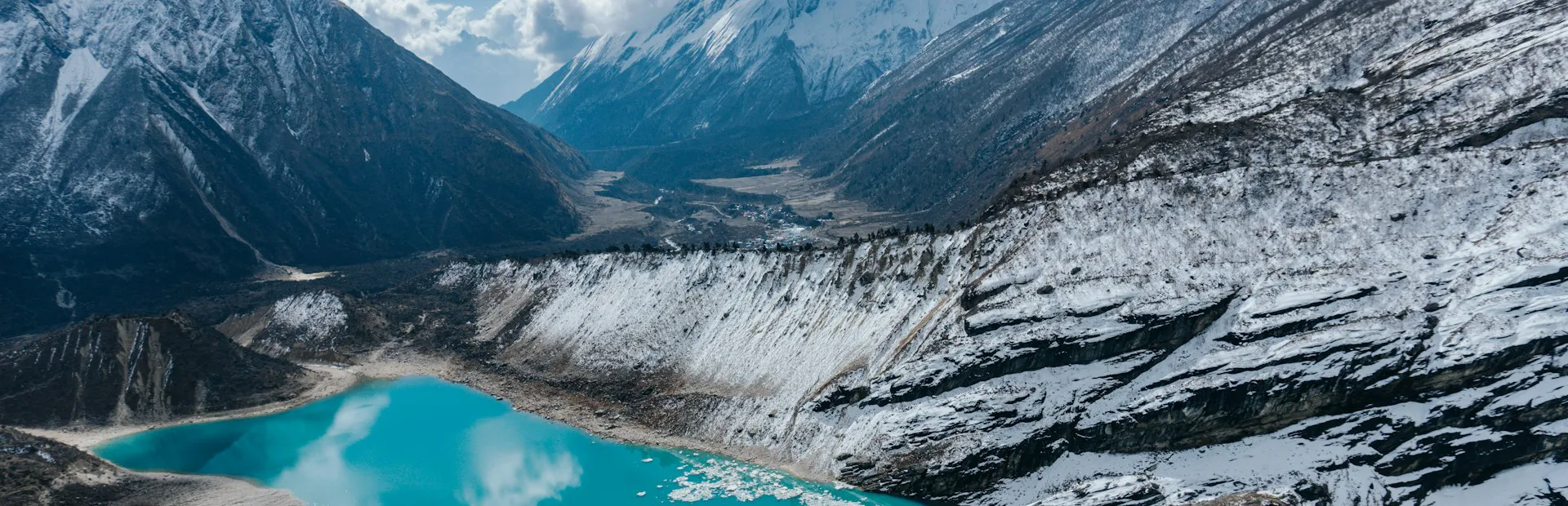
Manaslu Circuit Trek, a spellbinding adventure, encircles Mount Manaslu which holds the position as world number eight among highest peaks. Exploration of this trek lets visitors experience breathtaking environments as well as visit remote villages while experiencing Tibetan cultural heritage.
Due to its fewer number of visitors when compared to Everest and Annapurna it makes an ideal destination for people who enjoy being alone. The walking path follows thick forests and reaches high mountain passes while crossing cascading rivers.
The trek reaches its peak point at Larkya La Pass, with an elevation of 5,160 meters, but this section demands the most effort from trekkers. People who trek through the location experience both adventurous escapades and immersive cultural interactions.
The trek is accessible only with special permission and no single trekkers can proceed independently. The spiritual atmosphere increases through the presence of local monasteries like the Pungyen Gompa and prayer flags and chortens.
The trail demands physical stamina from participants but they will experience an exceptional payoff. The trek serves as the best option for both nature enthusiasts and veteran hikers who want to experience adventure.
The Manaslu Circuit Trek presents tourists an extraordinary combination of awe-inspiring landscapes coupled with cultural abundance along with thrilling exploration. The distance presents explorers with an elite adventure that goes beyond typical tourist routes.
Travelers encounter various ecological landscapes starting from subtropical forests and reaching alpine meadows on their paths. Since the pathway leads through rustic villages various Tibetan-inspired cultures persist there.
Several unique monasteries, one of them being Pungyen Gompa together with chortens and prayer flags can be seen throughout the landscape. Visitors seeking a quieter trek will enjoy this destination due to its lower commercial levels than Mount Everest and Annapurna.
Passages and rough ground elevation make the trekking path extremely difficult for all participants but hikers who pass through Larkya La receive fantastic wide views. The trail enables sustainable development of the local communities because it promotes tourism activities.
The trekker population remains limited through permit authorization systems which helps protect the natural artistic charm of the region. The Manaslu Circuit Trek brings cultural and amazing wonders to travelers who select this adventurous trek.

After landing at Tribhuvan International Airport in Kathmandu people receive airport pickup and hotel transportation becomes available. Spend your day exploring the city’s markets as you explore UNESCO sites while you relax and visit the active tourist and residential districts.
Visitors can enjoy Thamel if they have extra time to spend because this popular area contains both trekking stores and eating places. Your trekking guide will organize a compulsory briefing conference about the upcoming expedition during nighttime.


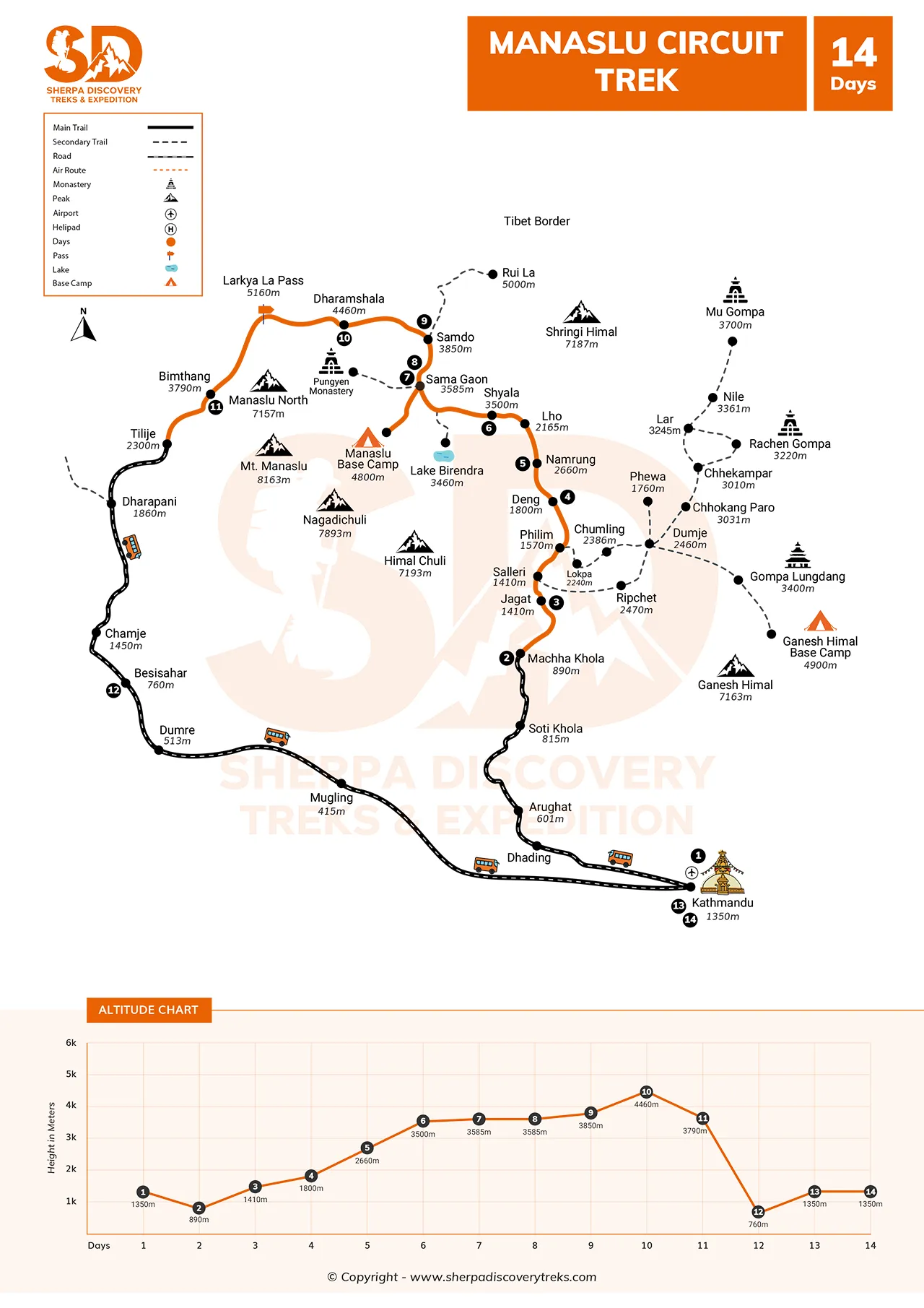
The Manaslu Circuit Trek starts from Machha Khola after an 8 to 9 hour drive from Kathmandu. From Kathmandu the road passes through dramatic hills and rivers along with fields in terraces while passing through towns including Dhading followed by Arughat ending at Soti Khola.
A combination of paved paths along with off-road pathways provides the chance to admire Trishuli River along with Ganesh Himal range. Machha Khola marks your starting location where you should check into a teahouse while eating dinner as you organize yourself for the first day of trekking.

The official start of your trek spans 6 to 7 hours between dense forests and traditional villages while you follow riverbanks. A river crossing at Machha Khola leads you to ascend through Tatopani (place of hot springs) before enjoying natural hot baths.
The rough path from Dovan takes you across waterfalls while presenting breathtaking scenery. Soon after bridging through various wooden and suspension structures you will arrive at Jagat which functions as the Manaslu Conservation Area checkpoint.
The Gurung cultural heritage becomes visible in this village because stone construction and prayer flags provide its beautiful streetscape.
The path proceeds from Jagat into the hills while crossing subtropical forest and terraced farmland. The route stops at Sirdibas and Philim to witness the excellent blend of Tibetan traditionalism alongside the presence of Buddhist chortens.
The trail extends through steep ridged terrain and rocky cliffs which provide astonishing views over the Shyar Khola Valley. When reaching Dyang you will notice the forest changes to alpine while temperatures drop. This small community holds perfect conditions for travelers seeking recovery before starting high-altitude excursions due to its mountainous setting.
Moving forward from Dyang the path travels along Budhi Gandaki River as it passes through woody pine forests and deep gorges. You will cross multiple suspension bridges when trekking through Bihi Phedi until you notice the increasing Tibetan Buddhist presence through mani walls and chortens.
Your climb leads you through alpine territory while providing fantastic views toward Ganesh Himal as well as Siringi Himal. Upon reaching Namrung village visitors find both delightful Gurung welcome and enchanting views of mountain peaks surrounding the place.
On day six you will proceed from Namrung to reach the elevation of 3,500m at Shyala.
Your trail today leads you further into Nubri Valley while presenting amazing views of the prominent Mt. Manaslu summit together with Himal Chuli mountain and Naike Peak in the distance.
The path connects Lihi and Lho because these two sacred villages are home to ancient monasteries and prayer wheels. When you ascend for a brief period you will reach Shyala which features glaciers and numerous peaks that tower over the valley.
The mountain town of Shyala allows visitors to fully discover Tibetan cultural practices because it contains yak herding grounds alongside historic stone villages and the distinctive Ribung Monastery. No matter how tired you feel you should sip in the peaceful mountain ambiance during this period before bedtime.
While moving away from Shyala you will follow a wide glacial valley that is enclosed by majestic snow-covered mountains. Travellers who wish to see Pungyen Monastery must divert their route before reaching Samagaun because this hidden Buddhist retreat provides spectacular views of Manaslu Glacier.
The peaceful monastery lets visitors understand the local monastic lifestyle. The next step will take you down through meadows and pastures of yaks to reach Samagaun which stands as the largest settlement in this area.
The combination of old stone dwellings fixed with prayer flags makes Samagaun a destination that allows visitors to relax while guiding their bodies toward adaptation.
People aiming to adapt to the altitude differences should begin by hiking up to the Manaslu Base Camp. The trail rises notably above Birendra Lake which shows off its turquoise body and creates a magnificent view.
The vista of Manaslu and Himal Chuli and the Manaslu Glacier improves with each stage of elevation. When you reach 4,800m you will encounter spectacular views across the Himalayas. Rest and explore Samagaun after sightseeing at Manaslu Base Camp and then make a slow descent back to the village.
The path leads away from Samagaun while ascending across high-elevation grasslands while following the Budhi Gandaki River. The mountain scenery gets bare and exposed during this trek as panoramas of the Himalayan peaks appear before your eyes.
The trekking route exposes you to view many mani walls along with stupas and yaks that haze mountain pastures as you experience Tibetan cultural immersion. The route from Samagaun to Samdo takes a short period that includes simple hiking to reach the last settlement before Larkya La Pass.
The Tibetan refugee community of Samdo consists of a small number of locals who run the place along with the opportunity to discover the area by hiking to ridge viewpoints during sunset.
The path leading to Samdo requires extra effort since it gains height steadily. Your path from Samdo proceeds through a challenging terrain which runs along the Larke River and crosses through unproductive areas and alpine mountain grasslands.
Your ascent brings you to thinner air conditions so the surrounding landscape switches from alpine to rocky mountain environment. From Samdo the trek brings you to Dharamsala (Larkya Phedi) which operates as the Larkya La Pass base camp after a 4 to 5 hour hike.
Spend the night resting in order to conquer what will be the most difficult but fulfilling trek day of the upcoming day.
The breathtaking climax of the trek will take place on this demanding day. Early morning departure is necessary because you need it to tackle the steep climb toward Larke La Pass which stands at 5,160 meters above sea level.
The path features rugged terrain with glacier moraines and icy ridges yet travelers receive stunning perspectives of Himlung Himal, Cheo Himal, Kang Guru and Annapurna II at the conclusion of their efforts.
After successfully accomplishing this section, you can safely descend to Bhimthang which features beautiful pastures alongside amazing mountain views throughout the night.
The path from Bhimthang heads downward through forested landscapes with rhododendron and pine trees until it crosses multiple crystal-clear channels and wooden building bridges.
You will encounter Yak Kharka and Gho which are small settlements where you can admire the Manaslu and Annapurna ranges in their full glory. The route ends at Besisahar when travelers arrive at Tilje to catch a jeep back to the settlement.
The end of your adventure includes a hot shower and delicious meal and restful sleep before continuing your travel to your destination in Kathmandu or Pokhara.
You will start your 6 to 7 hour drive to return back to Kathmandu or Pokhara after having breakfast at Besisahar. During this drive, you will observe spectacular sights of the Marshyangdi River while seeing green hills together with rural villages and riverfront scenery.
After arriving in Kathmandu you should find accommodation before spending your first night by wandering through Thamel for shopping or eating traditional Nepali food.
The fabulous Manaslu Circuit Trek draws to its end today. The remaining hours of your last day allow you to stroll around historical locations in Kathmandu while still having enough time for souvenir shopping or leisure activities.
Your representative will drive you to Tribhuvan International Airport to start your departing flight and thus bring an end to the beautiful Himalayan trek. Your memories of Nepal will include its distant landscapes along with demanding mountain trails and traditional heritage which will stay forever.



Autumn months from September to November together with spring months from March to May represent the optimal periods to explore the Manaslu Circuit Trek. The trekking trails remain safe during both autumn months of September through November and spring months of March through May.
Autumn brings clear atmospheric conditions along with moderate weather patterns while providing breathtaking sights of the mountain ranges. Traversing through the territory becomes most suitable during periods with stable weather conditions.
During springtime the area becomes colorful because rhododendrons start blooming. The daytime weather is pleasant but temperatures drop significantly during nighttime elevation.
Trekking schedules should depend on what preferences each person has. Individuals looking for green landscapes should visit during spring yet autumn delivers clear mountain panoramas. To achieve success during a trek hikers need to use proper equipment along with careful preparations.
Visiting the Manaslu Circuit Trek during winter presents significant challenges for trekking enthusiasts who will find deep satisfaction in their experience. A perfect snow-white terrain takes over the once brown and green mountainscape.
A decreased number of trekkers leads to increased privacy during hikes in this area. The elevation brings freezing conditions which intensify the more altitude increases. The climbing path at Larkya La Pass becomes tremendously challenging because of heavy snow accumulation and dangerous icy conditions.
Early morning departures become necessary because day lengths remain brief during this period. The remote areas will have limited teahouse facilities during these times. The equipment needed consists of crampons as well as thermal clothing for safety reasons.
All visitors headed to the Manaslu Circuit region must bring appropriate protection against rough and uncontrollable weather conditions. People who have previous experience trekking during winter seasons will find pleasure in this serene landscape.
Planning for winter Manaslu Circuit Trek enables you to experience an unforgettable Himalayan adventure between the months of October to November.
Monsoon Trekking
During June through August the Manaslu Circuit Trek becomes demanding because of intense monsoon rainfall. The excessive amount of rain transforms mountain paths into dangerous conditions that are both slick and badly damaged by erosion.
The natural habitat of leeches exists in territories with heightened humidity. The rainfall turns the landscape into thriving vegetation and steepling cascading waters. A reduced number of trekkers provides trekkers with a peaceful trekking experience.
Transparency throughout the trail changes frequently since fog clears up after wet periods. The crossing of Larkya La Pass presents safety risks because of weather instability. The weather conditions sometimes force specific teahouses to shut down.
It is vital to have waterproof gear together with strong trekking boots. Many people who appreciate lively outdoors alongside private time discover sufficient pleasure from this experience. The special Himalayan scenery during monsoon season requires careful trekking behavior but provides extraordinary mountain views.
Hiking the Manaslu Circuit Trek demands endurance and competence at high altitude heights. Travelers cross 177 km (110 miles) through multiple types of environmental features. Interspersed throughout the path are difficult hill climbs together with dangerous slopes and challenging rocky terrain.
Proper adjustment to higher altitudes is required to prevent the development of altitude sickness. The highest point, Larkya La Pass (5,106m), tests endurance and stamina. During the trekking period the walking duration extends from five to eight hours without interruption.
Unstable weather conditions as well as cold temperatures make the trek more challenging. For a trek to be successful the participants must undergo appropriate fitness training.
You should hire a guide because it ensures your protection along with improved directional skills. Experienced hikers who want adventure will find the trek to be their ideal reward. Hikers who develop both mental strength combined with physical stamina will triumph in finishing the Manaslu Circuit Trek.
Travelers who plan to explore the Manaslu Circuit Trek need to prepare fit enough to handle its physical challenges. Starting two months before the trek date enables trekkers to train their cardio and develop endurance and their strength through proper exercises.
Stamina along with leg strength results from performing hiking, running, cycling and climbing stairs. Walking long distances with a weighted backpack enables trekkers to prepare for their eventual trek conditions.
The trek demands equal mental readiness because it requires extended walking times combined with elevated altitudes and changing weather patterns. Essential gears consisting of warm clothing and trekking poles and high-quality boots and footwear will provide comfort during the trip.
The successful completion of the trek requires trekkers to keep their mindset positive and to stay hydrated and follow the necessary acclimatization procedures.
Larke La Pass functions as the highest climbable obstacle of the Manaslu Circuit Trek because it reaches 5,160 meters above sea level. The pass provides extraordinary vistas of four magnificent peaks which include Himlung Himal (7,126m) and Cheo Himal (6,820m) and Kang Guru (6,981m) with Annapurna II (7,937m) as the fourth peak.
Rising to Larkya La Pass demands a steep and lengthy climb with challenging conditions which requires adequate rest for adaptation to high elevations. Trekkers begin their ascent prior to dawn because the powerful winds become more intense in the afternoon.
The descent from Bimthang presents the same level of difficulty because it leads through slippery ice and rugged areas. The peak seasons experience unforecastable weather that can lead to cold winds along with snowfall occurrences.
Travelers should opt to cross the pass between September to November or March to May since these months have clear weather and stable mountain trails. Passing through Larkya La becomes the main attraction and develops into a lasting accomplishment within the trek experience.
The required permits to access the restricted-area during Manaslu Circuit Trek must be obtained by all trekkers seeking entry.
The Manaslu Restricted Area Permit (RAP) is priced at $100 for the first seven days of peak seasons and the Manaslu Conservation Area Permit (MCAP) together with Annapurna Conservation Area Permit (ACAP) charge $30 each.
The trekking rules demand solo traveling to be forbidden. People must arrange a licensed tour guide and organize in pairs for the entire journey. The trekking agency which holds registration will organize permits to enable proper documentation.
Through the permit system the protection of local communities and nature occurs simultaneously with tourism management for preventing commercialization excesses. These regulations create safe trekking conditions leading to legal procedures and sustainability of the Manaslu region to benefit future trekking enthusiasts.
The successful completion of the Manaslu Circuit Trek requires proper acclimatization because the elevation rises steadily above 5,000meters. During the trek, there are two scheduled stops at Samagaun (3,530m) and Samdo (3,875m) that help the body adjust to reduced oxygen levels.
Proper precautions are essential because Acute Mountain Sickness (AMS) leads to symptoms of dizziness alongside nausea and headaches and breathlessness among its manifestations. A gradual ascent along with minimum daily water intake of 4 liters is necessary for trekking safety.
The process of acclimatization can be supported through eating high-energy meals together with avoiding smoking and alcohol consumption while also following medical instructions to take Diamox.
Trekkers must move lower on the elevation if their AMS symptoms become dangerous. Acclimatizing properly helps trekkers achieve both safety and fun while trekking because it minimizes the chances of developing major altitude sickness illnesses.
Multiple awesome side excursions on the Manaslu Circuit Trek provide visitors with outstanding additional opportunities. The ultimate base camp destination on the trek is Manaslu Base Camp (4,800m) situated above Samagaun which provides breathtaking views of Mount Manaslu to all visitors.
The secluded Buddhist monastery Pungyen Gompa (4,000m) stands out among other attractions because it faces stunning views of the Manaslu Glacier. Visitors following the trail from Samdo will reach the Tibetan border at its highest point of 5,000 meters while experiencing ancient trade paths and sweeping Himalayan views.
Tsum Valley provides people with an optional five to seven-day detour that offers visitors a profound encounter with traditional Tibetan cultural ways of life. The various side expeditions in the Manaslu Circuit trek region give travelers chances to discover both exciting wilderness thrills and historical cultural sites that enhance their adventure through this destination.
Ethnic Gurung communities and Tibetan Buddhist people living in the Manaslu region successfully protect their traditional beliefs from ancient times. Throughout the trekking route visitors encounter monasteries and chortens together with mani walls as well as prayer flags which demonstrate the sacred nature of the area.
The two Villages of Samagaon and Samdo maintain an existence based on Tibetan religious customs that include yak herding and barley crop growing. The religious festival Lhosar occurs at the same time as the trek during which local people dance with masks and hold religious rituals.
Himalayan culture is best experienced in local traditional cuisine which includes butter tea beside roasted barley flour named tsampa and the traditional Tibetan dish known as momos. Visitors who honor customs during their trek develop a fuller understanding of Manaslu’s heritage as this practice enables positive connections with indigenous communities.
The trails of Manaslu Circuit Trek lead explorers through various natural habitats which provide suitable environments for numerous animal species particularly inside the Manaslu Conservation Area.
Enthusiasts of mountain trekking often come across blue sheep as well as Himalayan tahr and marmots and pika species in the alpine meadows region. The snow leopard exists in this region but detecting its presence remains an improbable occurrence.
The thick forest areas near the ground level serve as suitable habitats for langurs together with Himalayan black bears and red pandas. The winged species of Himalayan Monals together with eagles and vultures glide above the region.
Conservation work has successfully protected wildlife populations in the area rendering this trip as the best way to encounter Himalayan wilderness. Proper environmental respect along with avoiding trash disposal and abstaining from approaching animals supports an important balance in the area’s fragile ecosystem.
The Manaslu Circuit Trek supplies standard accommodations through various local teahouses positioned throughout the trekking path. Teahouses offer shared twin-bedded accommodations with basic bedding schemes but they supply shared squat toilets as rest facilities.
Other facilities including Wi-Fi and hot showers as well as charging services exist at mountain elevations but require extra payment. One amazing feature in the tea house is the communal dining area, a place where you can eat traditional food and share talks with fellow trekkers while enjoying the warmth from the heat source.
Tea houses serve food including nourishing Dal Bhat consisting of rice and lentils with vegetables. The menu includes Tibetan bread, porridge, momos, fried rice and noodle soups as other dining options.
The availability of food becomes more restricted when traveling above because transportation becomes increasingly difficult resulting in higher product costs. The trek requires trekkers to bring along energy bars and dry fruits as well as snacks to increase their energy supply.
Sitting in locally managed teahouses helps build up local economies while providing genuine ethnic encounters.
The Tsum Valley Extension provides an extraordinary spiritual and cultural opportunity to those completing the Manaslu Circuit Trek. Since its isolation Tsum Valley earned its title as the ‘Hidden Valley’ and it holds substantial cultural value while Tibetan Buddhism shapes its foreground.
Residents of this region find their refuge in two notable ancient monasteries which house monks and nuns dedicated to meditation practices. Traversing through remote agricultural settlements, yak grazing areas and stepped agricultural regions leads visitors to observe beautiful vistas of Ganesh Himal and Shringi Himal ranges.
Intending to explore Tsum Valley requires a minimum of 5 to 7 additional days to the overall tour while demanding a restricted area travel authorization. Travelers can experience an unconventional exploration of this region to encounter cultural sights and peaceful natural landscapes which lie outside the main Manaslu trekking path.
People cannot attempt the Manaslu Circuit Trek solo because the Nepalese government prohibits this practice. All trekkers on the restricted area paths must pair up with a government-licensed guide and another individual as safety regulations maintain this requirement.
The rule exists to maintain safety when exploring unpredictable weather areas and landslide zones and high-altitude passes in remote sections. Along with route navigation and cultural education and emergency response in case of altitude sickness the guide accompanies trekkers.
Agencies offer their services to pair loners with group members so they can qualify for the minimal two-person requirement. The Manaslu route has its best quality achieved when trekking alongside expert guidance because solo trekkers face fewer control restrictions.
Groups seeking personal spaces on their trek have the chance to find quiet trails along with empty local areas within multi-person groups.
Entries into the Manaslu region demand three separate permits including the Manaslu Restricted Area Permit (RAP) and Manaslu Conservation Area Permit (MCAP) together with Annapurna Conservation Area Permit (ACAP). A unique permission from authorities is needed to access Tsum Valley.
The Manaslu Circuit Trek ranks as a moderately to highly demanding trek because of its remote landscapes and impressive Larke La Pass height (5160m) together with daily trekking durations that exceed 5 to 8 hours. To succeed on this trek good physical fitness should be combined with prior trekking experience.
The Manaslu Circuit Trek reveals its most beautiful scenery together with stable weather conditions during autumn (September to November) and spring (March to May periods).
The trek exists as a teahouse trekking route thus you will stay at basic lodging facilities with twin-sharing bedrooms and dining zones and traditional Dal Bhat meals for meals.
Starting from Maccha Khola or Soti Khola requires a 7 to 9 hour jeep or bus drive from Kathmandu that leads to Arughat and Maccha Khola.
Travelers experience safe conditions when they perform proper altitude adaptation and listen to guide directions and protect themselves from altitude sickness. Hiring either a guide or porter with experience will enhance trip security.

Need help?
Talk to trip expert