English
 Dutch
Dutch Japanese
 Hindi
Hindi Italian
 Spanish
 French
 German
 Chinese
 Korean
 Arabic
 Hebrew
 Russian
 Portuguese
 Danish
 Czech
Czech Polish
 Swedish
Need help?
 +977 9767994912


Trip Duration
7 Days
Trip Difficulty
Difficult
Max. Altitude
4,065m / 13,337ft.
Activity
Trekking
Destination
Nepal
Group Size
1-16 Pax
Accommodation
3 star Hotel
Meals
Breakfast, Lunch, Dinner

Need help?
Talk to trip expert
Have you already conquered all the difficult mountain routes and now you are hungry for something new, easy but equally stunning trails? Then it’s time for the Pikey Peak trek in the lower Solukhumbu region of Nepal.
The Pikey Peak trek is not very strenuous and is a simple introductory trip to the Solukhumbu region of Nepal. Our Pikey Peak trek itinerary promises every element of exciting trekking and climbing adventure with its moderate ascents, exhilarating descents through lush forests, charming mountain villages, and serene Himalayan streams.
It’s no wonder that Edmund Hillary claimed the Pikey Peak as the best lookout point and his most favorite trekking destination. Although the Pikey Peak trek route runs through the most known Everest region but it will journey you along the lesser-walked trail without the overwhelming presence of other hikers, allowing for a truly peaceful experience.
Most travel agencies will take you to the 4065 m high summit of Pikey Peak but there is also another twin peak of the summit which stands at 4095 m altitude in the Gaurishankar Conservation Area. We will be ascending both the twin summits setting our Pikey Peak trek 7 days adventure different from others.
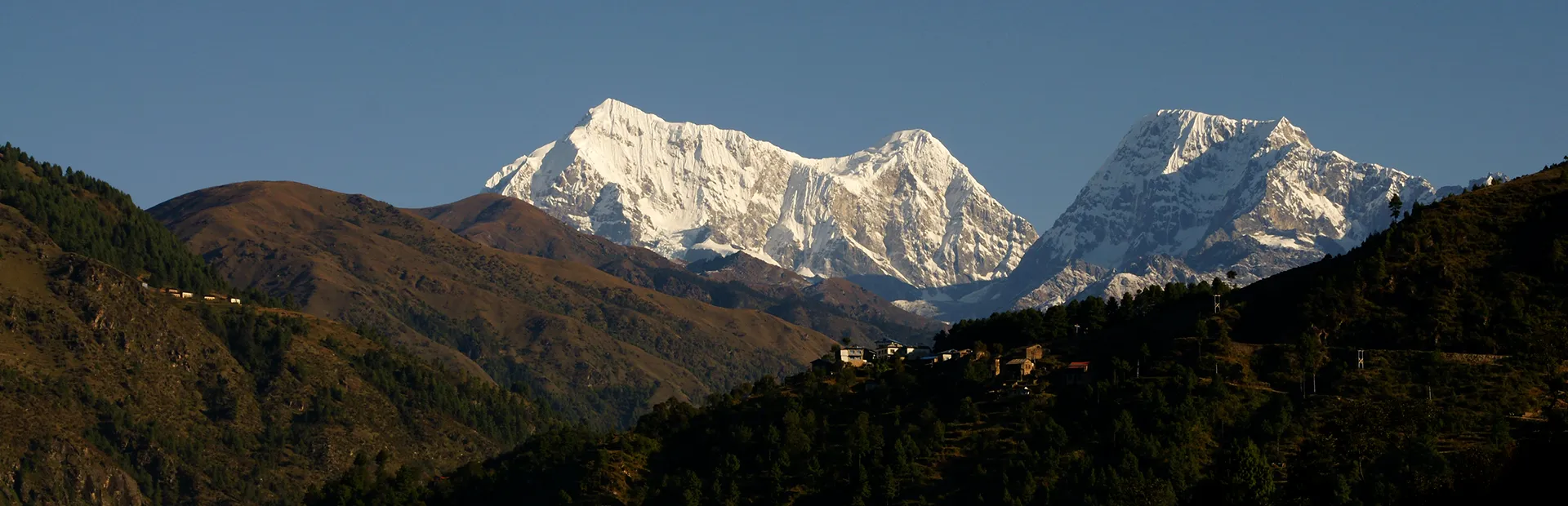
From both summits, we can gaze upon the 350 kilometers of the Nepalese Himalayas, from Kanchenjunga (8586 m) in the east to Annapurna I (8091 m) in the west.
Other eternal snowy pyramids of Dorje Lhakpa (6966 m), Numbur (6958 m), Mera Peak (6476 m), Everest (8848 m), Gaurishankar (7134 m), Langtang, Khatang (6782 m), Dhaulagiri (8167 m), Thamserku (6608 m), Cho Oyu (8201 m), Rolwaling, Manaslu (8163 m), Chamlang (7319 m), Kangtega (6782 m), and Lhotse (8414 m) can also be seen with the two giants.
Our Pikey Peak trek itinerary will take you from Kathmandu to Dhap Bazaar passing through the beautiful Okhaldhunga town. You will then begin walking beneath the shadow of Everest and make your way to 3640 m high Pikey Peak Base Camp through Jhapre.
Once you ascend the Peak, our Pikey Peak trek route will continue through Jasmane Bhanjhyang to Junbesi, where you will pass Taktor Village, the point where the traditional EBC trail from Jiri meets.
In the village of Junbesi, you will have the remarkable opportunity to discover the ancient Thupten Choeling Monastery. Then, you will walk up to Phaplu and drive back to Kathmandu.
Our Pikey Peak trek 7 days journey will also allow you to engage with the Sherpa community, see their characteristic Buddhist Mani walls, and chortens and discover their uniquely beautiful custom and tradition.
Overall, the peaceful atmosphere, the less crowded path, the enchanting mountain views, the warm hospitality of the Sherpa people, the relatively easy trekking nature, and the accessibility to all types of individuals make our Pikey Peak trek adventure one of the most complete journey in Nepal.
In fact, after completing our Pikey Peak trek itinerary, you can even challenge yourself with a more demanding trek that takes you above 4,000 meters or even approaches 6,000 meters.
Available in all seasons, the Pikey Peak trek is most beautiful during the shoulder season of autumn and spring. So tie up your hiking boots and let’s journey together to the extraordinary Pikey Peak trek where the beauty of nature awaits your exploration.

Early in the morning after we finish our breakfast, we will get ready to commence our Pikey Peak trek with a sharing jeep ride from Kathmandu towards Dhap which is the small village of Sherpas of lower Solukhumbu region.
At first, the beautiful Araniko Highway will lead us through the charming towns of Bhaktapur, Banepa, and Dhulikhel. Next, we will take the Okhaldhunga road of the Pushpalal (BP) Highway and eventually reach the Sun Koshi River.
Watching the authentic hilly Nepal and a few rafters on its water, we will progress with our drive and reach beside Tama Koshi River. Shortly after, we will be resting for a while at Ghurmi Village.
Resuming our drive, our jeep will now direct us toward the beautiful Okhaldhunga town. Now, we will proceed along the Okhaldhunga-Solumkhumbu highway flanked by the hills of rhododendrons and pine trees.
The bumpy dirt road will constantly rise for around three hours ultimately resting us at Dhap Village- a beautiful spot to see the closer profiles of Mera, Everest, and Kanchenjunga.


Today is a very exciting day as we will be beginning the trekking segment of our Pikey Peak trek itinerary. The trek will mainly be uphill but the ascent will be gradual.
From Dhap, we will start to hike along a gentle sandy road, with occasional shortcuts through the lush rhododendron bushes. As we near Sigane Village, we can feast on the magnificence of Numbur, Everest, and other towering Himalayan giants.
Our path will now navigate through the rising forest filled with rhododendrons, firs, and oaks. We will also pass several waterfalls on our way to Jhapre.
Throughout the journey, we will spot the characteristic Buddhist Mani walls, stupas, and chortens. The village houses the small Buddhist Monastery which we can visit after a brief rest.
From Jhapre, we will start to walk up toward the very grassy ridge of Bhulbhule. This small village has a charming tea house from where we can admire the stunning Everest while sipping a hot cup of tea.
After Bhulbhule, the trail will diverge but our trail will be toward the right. Now, the trail starts to take a steep turn running deep through the enchanting rhododendron forests.
We will be at tiny Lhamuje Village from where we will continue to climb through the alpine grassy meadow and see yaks here and there lazing around.
Climbing steadily along the path flanked by the Mani Walls, we will tackle the two ridges of Ramdin and Taklung which offer a much closer view of Everest and Numbur.
Continuing on, we will follow a picturesque woodland path adorned with rhododendrons of Loding Village. After about two hours of upward climbing, we will be at the Pikey Peak Base Camp. Nearby, we can see the small cheese factory which we can visit if you like.
Our aim for today is to reach the summit of Pikey Peak in time to watch the magical sunrise over the peak. So as soon as our alarm rings, we will set forth in darkness with our headlamps on and start to climb the sharp and rocky ridge line.
The upward ascent from the base camp to the Pikey summit is just two hours long and there can be snow along the way so vigilance is required.
We will tackle both the twin summits of the Pikey Peak and watch in awe at the breathtaking silhouettes of Langtang, Dorje Lhakpa, Gaurishankar, Dhaulagiri, Manaslu, Kanchenjunga, Khatang, Kangtega, Thamserku, Numbur, and of course Everest.
After capturing the precious moments with these titans, we will descend back to our base camp for a warm, hearty meal. We will now continue our journey downhill through expansive meadows and lush rhododendron forests towards Jasmane Bhanjyang.
We will traverse a beautifully winding path, primarily descending. As we exit the forest, Jasmane Bhanjyang appears in the distance, nestled below us—a quaint village with just a few houses.
Today, we will be taking a stunning uphill and downhill journey up the mountain at a steady pace. After breakfast, we will walk slowly through the enchanting rhododendron forests and dry grasslands to Taktor Village.
This tiny village is where the Jiri meets the old trekking trail of Everest Base Camp. From Taktor, we will now trek along the dusty trail til we are at Junbesi.
After a few moments of rest, we can set on to visit the renowned Thupten Choling Gompa of the village. It is a 19th-century monastery at 2920 m for which we will have to ascend a while to reach.
Alongside Junbesi Khola, we will climb through the bubbling streams, waterfalls, and coniferous jungle. We will also walk across the hanging bridge and walk past the mysterious stone tombs.
After a while, we will finally be at the religious monastery where around 400 Nyingma monks and nuns reside. The traditional paintings, sculptures, and art are still authentic and genuine here. We can also see the gigantic features of the Numbur massif from up here.
After a few well-deserved times at the Gompa, we will head our feet back down to our tiny shelter.
From Junbesi, we will traverse a gently sloping trail alongside the Junbesi Khola until we reach a steel hanging bridge. After walking over this bridge, the trail will shortly lead us to Beni Ghat.
From here, the beautiful scenic trail will then direct us to Phaplu. On the way, we can also discover the historic Chiwong monastery, which was built in 1923.
In Phaplu, we will be welcomed by the nicest beds and green hills. The village also has a landing strip. Here, we can enjoy a nice hot cappuccino or latte macchiato made from a real coffee machine.
Sadly, our Pikey Peak trek 7 days journey will conclude today as we drive back towards Nepal’s capital. Once again, a shared local jeep will be ready to travel us back along the winding mountain road.
However, there are also options for hiring a private jeep transfer or flight from Phaplu to Kathmandu at an extra charge. Our jeep will drive us along the steep hills of Solukhumbu for a while.
Later, the Okhaldhunga road will welcome us taking us back through Okhaldhunga from where we will soon reach beside the marvelous Sun Koshi River.
Turning west, the BP or the Pushpalal Highway will take us for a while eventually joining the Araniko Highway. It will drive us through Dhulikhel, Banepa, and Bhaktapur on our way to Kathmandu.
A lovely farewell dinner will await you in the evening in Kathmandu where we will celebrate with a toast to our successful Pikey Peak trek.


Our Pikey Peak trek 7 days journey will allow you to feel all the mild climate of Kathmandu, the subtropical climate of the Sherpa Villages to the frigid alpine weather of the summit where the snow and ice reigns all year.
Therefore, the most favorable opening for undertaking the Pikey Peak trek is during the Fall/autumn months. Starting in September, the intense summer heat and rain begin to drop and the sunshine hour starts to increase.
By October and November, the thermometer often settles down to 23 to 26 degrees Celsius. The lush forests begin to shed their leaves and give more clear views of the Khumbu Himalayas.
The next favorable opening for this trek will be in Spring. Beginning in March, the cold heat from winter starts to rise reaching 28 degrees Celsius in April. Expect long sunny days, less rain, and the crisp air flowing through the green hills.
The third suitable opening for the Pikey Peak 7 days journey will be in winter. Beginning from December, the heat starts to drop, and the air becomes cooler, but the days will be driest and sunniest. However, the snow around the base camp and the summit can be hard to tackle.
The least suggested time will be summer and monsoon. Starting from June, the rain starts to shower the lower Khumbu which become more intense through July and August. The humid wet trail, the leeches, and the cloudy days are not so pleasant to walk through.
Pikey Peak is designated as a trekking peak and not a climbing summit in Nepal which means the reaching journey to the summit doesn’t require extensive climbing or mountaineering.
The Peak also don’t require any usage of technical gear or skill and its height under 4100 m makes it the most achievable peak in Nepal suitable for new travelers.
As for the Pikey Peak trek route, expect it to be moderately demanding which will culminate at nearly 4100 m elevation. Devoid of taller passes, ridges, and hills, the route is yet exciting offering you to experience the grandeur of the Himalayas up close.
However, it is necessary to acknowledge that although easy and simple, the peak is still an eternal Himalayan rock which has its own challenges. There are few inclines, and declines, there are also rising dense forest trails, crossing of the high bridges, and alpine walk along the snowy terrain.
The daily stages of the trekking will also need you to put effort for 5 to 6 hours to reach the scheduled overnight locations. And, the limited popularity of the trail lead you to basic lodging options, which has its own drawbacks.
Therefore, a good fitness level, health, and a mindset ready to let go of luxury for a week is essential for this journey.
Our Pikey Peak trek 7 days journey is considered one of the very short yet enchanting journeys in the Himalayas of Nepal. The trekking distance spans only 94 km completely achievable within a week.
The trek route consists of a positive and negative elevation gain that sometimes exceeds 1000 m altitude yet the path is devoid of any very steep sections.
In addition, the Pikey Peak trek route consists of fairly remarkable mountain lodges or shelters that fer you comfortable staying for a night. You will also have the support of our expert guide and the porter who will ensure not only your journey but also your evening rest is delightful.
Over the years, we have seen many of our participants enjoying this trek with their children, spouse, friends, parents and grandparents who are of course the inexperienced hikers.
Many of them even stated this adventure ignited the passion for trekking in their hearts. So yes, our Pikey Peak trek is a completely breathtaking beginner-friendly expedition in Nepal.
Although the Pikey Peak trek itinerary spans only a week, it still is a moderate high-altitude trek that will take you from the 1350 m plain of Kathmandu to 2850 m of Dhap Village within just 8 hours.
This altitude is similar to that of Lukla and just like in the Everest Base Camp trek, you will exceed 3,000 meters on the third day. On this day, you will sleep at 3640 m altitude of the Base Camp of Pikey Peak which also happens to be the highest point of your overnight stay.
Due to such rapid ascent, you won’t have sufficient time to get accustomed to the thin air of the high alpine environment of Pikey Peak.
Fortunately, the next day, you will descend below 3,000 meters, which means you will have limited exposure to high altitude. This means you may only experience mild symptoms of altitude sickness or Acute Mountain Sickness (AMS), such as sleeplessness, fatigue, headaches, nausea, disorientation, and slight swelling in your limbs.
If you have these symptoms, you should force to drink as much water or fluids you can and rest at the same spot. You can continue to ascend but with slow and gentle pace.
If you think altitude will effect you more, then you can also start taking Diamox when you are at Kathmandu. We advice all our guests not to race or sprint as the high elevation Himalayan journey is like a marathon.
You will have to be vigilant with gentle pace that aligns with your health and fitness. If the symptoms do not go away with in a day or two, please talk with our guide and think about descending to the pace where you feel better.
Because the Pikey Peak Trek route presents a medium-level challenge with the rugged winding hilly and snowy trail, a moderate degree of mental and physical readiness is a must for this trek.
After all, small or big, the Himalayan Peak is a Peak where anything can happen at the least unexpected time. Besides, an adequate amount of preparation will always help you in tackling the long day hikes without much of an effort.
So, we encourage you to dedicate some time and effort to prepare for the challenge the peak may present. Please prepare with walking, jogging, swimming and cycling.
The best form of exercise for the hiking will however be running beginning with mild distances then gradually increasing day by day. If you incorporate few uneven terrains for running, much better.
You should also focus on leg-strengthening workouts in the weeks such as squats, rope skipping and stair climbing that will help you get used to the ups and downs of the terrain of the lower Khumbu.
We also suggest you to get to know about the route, the nature of trekking, and the climate of the Pikey Peak trek. Also, be prepared to let go of comforts for a few days and immerse yourself in the stunning natural surroundings.
Pikey Peak trek means it is the tea house trek and we will arrange all your overnight stays at one of these ta houses along the route which we promise to be the finest one.
However, these accommodations will be pretty basic that offer only the essential services needed for a night or two. Such as food, drink, sleeping arrangements, showers, and electricity (with extra fees often applicable for hot water and charging devices).
Please do not expect any luxury; the rooms will be simple wooden cubicles separated by thin partitions, and the beds consist of wooden planks with foam mattresses.
Often the shower and toilet facilities will have to be shared for the use. We therefore advise you to have your own sleeping bag for the chilly night at the mountains.
Regarding the dining arrangements, we offer you breakfasts, dinners, and lunches in tea house. The cuisine available along the trek is simple yet satisfying with options like noodle soup, dal bhat, spaghetti, fried rice, pancakes, and muesli.
On the last night in Kathmandu, we also offer you a nice farewell Nepali dinner so we can celebrate together the beautiful memories we have gathered on the trip.
Regarding transportation, we will transport you to Dhap from Kathmandu and from Phaplu to Kathmandu via 4 by 4 local sharing jeep. You can also upgrade your transportation in a private jeep or choose to fly from Phaplu to Kathmandu at an extra charge.
Please do not assume that Pikey peak trek does not need any permits as the journey does need some mandatory permits before travel. The only permit that is not needed for this adventure is the climbing permit for Pikey Peak as it is classified as a trekking summit that comes under 4100 m elevation.
For the trekking journey, the three permits are must which include the two conservation areas entrance permits for the Gaurishankar and the Sagarmatha and the municipality permit for the Khumbu local area.
Both conservation area permits are achievable in Kathmandu at USD 30 per traveler. The municipality permit of Khumbu will be available in Dhap at 2000 NPR (around 16 to 17 USD) per traveler.
Please note that the TIMS (Trekkers’ Information Management System) card will not be necessary for this trek as we already have the Khumbu permit.
In addition, all the permit associated fees are the essential part of our travel cost and our guide will be attaining these papers as your correspondent in Nepal.
Travelers often mistake travel insurance is essential only for the high-altitude Himalayan trekking journey. However, we like to emphasize that travel insurance is equally important and compulsory for our Pikey Peak trek as well.
In the absence of your proper insurance plan, we won’t be able to procure the obligatory permits needed for this trip. On the other hand, travel insurance
Please also don’t misunderstand that travel insurance is not essential for the seasoned hikers. No, they are equally important and significant for both the experienced and inexperienced hikers just like the right type of gear, suitcase, clothing and the passport.
It is because accidents and unwanted and unexpected incidents to anybody at any time especially in the high mountains. Sprained leg, fractured limbs, AMS, and sudden medical emergencies are some of such example that may require the immediate helicopter transport to the medical facility.
In such cases, your travel insurance will act as a loyal friend helping you with the heli rescue management and cost. For the Pikey Peak trek 7 days journey, we recommend that you take out the insurance policy that can support you to the altitude of 4100 m.
We also suggest you to add more coverage for the luggage damage, theft, and loss along with the trip postponement and cancellation.
Yes, you can be connected with WiFi along the route to Pikey Peak and can take advantage of the Airlink or Everest Link prepaid WiFi card. However, please note that the signal may be sporadic and not as strong for high-speed connectivity.
Yes, the government supplied 230 Volts of power to the lower Solukhumbu now so you can easily charge your gadgets at an extra charge at the tea house.
Yes, one other route is available to reach Pikey Summit but it is one of the long and tough ones that begins with a driving journey from Kathmandu to Shivalaya.
Then, you will have to walk through Bhandar, Namkheli, and Nagaor Gumba to reach the summit and its base camp. On the way back, you will have to overcome the 3530 m high Lamazura La Pass and trace back a similar path to Kathmandu.
It is because the Pikey Peak trek is relatively new and yet needs publicity and promotion from the government, trekking agencies, and of course travelers.
We must clear that the permit is not needed for climbing the summit but we will be needing it for the hiking journey no matter what the internet says.
Yes, they are very close to each other and the height difference is also not much so we will be going to both peaks and enjoy our brief time there.

Need help?
Talk to trip expert