English
 Dutch
Dutch Japanese
 Hindi
Hindi Italian
 Spanish
 French
 German
 Chinese
 Korean
 Arabic
 Hebrew
 Russian
 Portuguese
 Danish
 Czech
Czech Polish
 Swedish
Need help?
 +977 9767994912


Trip Duration
26 Days
Trip Difficulty
Difficult
Max. Altitude
5,115m / 16,781ft.
Activity
Trekking
Destination
Nepal
Group Size
1-16 Pax
Accommodation
3 star Hotel
Meals
Breakfast, Lunch, Dinner

Need help?
Talk to trip expert
The Upper Dolpa Trek represents one of Nepal’s distant outdoor expeditions which exists in western Nepal. Tourists go through unexplored natural scenes alongside aboriginal monasteries and towns with Tibetan architectural elements. The trek extends over multiple weeks because it presents serious difficulties to walkers.
The travel route starts with a Juphal flight then continues with trekking across high terrain and deep valleys. The trek leads travelers to Shey Phoksundo Lake along with Shey Gompa which has a mystical aura. The natural isolation of the region has maintained its historical culture together with traditional customs.
People who trek witness an array of natural scenery ranging from absolute desert areas to fertile fields. Trekking at high altitudes brings out magnificent panoramic sights as your reward.
Upper Dolpa Trek provides perfect conditions for people interested in complete seclusion together with cultural insights. Travelers can have the opportunity of a lifetime by visiting Nepal’s secluded mountain territory.

Kathmandu serves as your first stop in the Upper Dolpa Trek where the Nepalese capital unites tradition with contemporary life. You will get welcomed by a representative who will transport you from Tribhuvan International Airport to your chosen hotel. The time allows rest or discovery of the active Thamel streets.
You can find many cultural sites with their ancient temples and stupas and palaces throughout the city of Kathmandu. Explore the nearby landmarks and enjoy a restful time at a local café to experience the energetic atmosphere of the city.
The street food atmosphere produces a sensory sensation through sights, alongside sounds and aromas. You will have the opportunity to experience the traditional Nepali welcome dinner which will take place in the evening.
The traditional Nepali dishes consist of dal bhat with rice along with lentils and momo dumplings and other local traditional food types. A briefing about the upcoming trek will be provided to you.
The upcoming adventure begins so get enough rest for today. Your first stop after resting will be to travel from Kathmandu to Upper Dolpa while exploring its UNESCO World Heritage sites.


Kathmandu city tour sets off shortly after you complete your breakfast schedule. The first destination of the day brings visitors to Swayambhunath (Monkey Temple) where they can enjoy city vistas from the Buddhist stupa. The sacred site is animated by both prayer flags and monkeys that wander freely between each other.
You should make Pashupatinath Temple a stop as it stands as Nepal’s main Hindu shrine next to the Bagmati River. People observing cremations participate in local devotional services at this venue. A special feature of the temple is its golden pagoda and complex wood carving design.
End your visit at Boudhanath Stupa which ranks among the biggest Buddhist stupas worldwide. People who make pilgrimages to this site perform moral spinning of prayer wheels while muttering sacred prayers.
You should meet your trekking guide for a briefing about the Upper Dolpa Trek during the afternoon while you verify all equipment. Execute all remaining preparations by confirming you possess every essential piece of equipment. Spend a calm evening before beginning packing for the early morning flight to Nepalgunj.
Your trip leads onward to Nepalgunj, the active western Nepalese town through a short flight. Traveling by air over the Himalayan mountains and green valleys consumes roughly one hour of flight time.
The hot and moist conditions of Nepalgunj prevail in this Indian border town. The location functions as the main transportation center for western Nepal, where it links isolated areas including Humla and Dolpa.
Trekkers will arrive at their hotel after completing the landing procedure. A spirited atmosphere prevails throughout the town from its busy avenues filled with crowded roads and colorful markets that sell both Indian and Nepali merchandise.
The local bazaars become accessible at night where you can taste street food that includes samosas and jalebis. The town shows cultural diversity which results from both Nepalese and Indian influences.
You should get a good night’s sleep because the following day requires flight transportation to Juphal which deepens your mountain journey. The start of the real Upper Dolpa Trek awaits you at this point.

The morning starts with an aircraft departure from Nepalgunj leading to Juphal which operates as a tiny airstrip located within the Dolpa region. Aerial views of Himalayan peaks and winding rivers with deep valleys are visible for 35 minutes during this flight.
Rugged hills encompass this small aviation facility which represents your genuine trekking commencement point. When you arrive in Juphal with the trekking crew members the journey will lead you toward Dunai.
Travelers walk along a difficult serpentine track that passes through agricultural terraces together with rural settlements. As you walk through the Dolpa region you will observe local farmers maintaining their crops and the villagers conducting their normal activities.
You will see remarkable views of the valley while the trail follows the Thuli Bheri River. The trail guides you across suspension bridges until you reach pine forests while descending to the region.
At Dunai (2,150 m) you will stay at a local teahouse which serves as the district headquarters for Dolpa. The settlement serves as the final civilized point before people start on their trek into the distant territory of Upper Dolpa.
Starting from here will have you crossing the Bheri River by using a lengthy suspension bridge until you reach Shey Phoksundo National Park. The protected area shelters musk deer and Himalayan tahr as well as blue sheep together with other wildlife species.
Walking on you will traverse through woodlands that contain pine trees and rhododendron plants and junipers. Breathing the fresh mountain breeze fills your airways as you listen to both the river’s running waters and birds’ constant song for a soothing environment.
The checkpoints for trekking permits can be found at the tiny village of Sulighat. The trail ascends along the course of Phoksundo River as it moves through an increasingly picturesque environment.
Chhepka (2,660m) represents a small settlement immersed within forested territory where you can establish camp or utilize basic teahouse facilities. The night temperature rises with increasing altitude just before the upcoming adventure begins.
From Chhepka the hiking path follows the Phoksundo River while it rises through a woodland environment. The combined protection of dense vegetation and soothing stream water from the river accompanies the trekking journey.
The path reveals porous rocks together with broad valleys while ascending through the elevation. The decreasing altitude thickens the air so each stride becomes somewhat harder to complete. You will start spotting the Tibetan Buddhist influence on the trail because prayer flags begin to appear.
The Amchi Hospital stands out as a major highlight of the day because it functions as a critical center of Tibetan traditional medical practice. The Amchi healers practice Tibetan medicine by employing herbal treatments together with spiritual rituals and historic medical practices for the patients living in this isolated region.
You will base yourself at Chunuwar (3,020m) which is situated at the point where two rivers meet. The imminent approach of Phoksundo Lake makes the coming trek a source of increasing anticipation for the next day.
Traveling toward Phoksundo Lake delivers visitors a combination of epic views together with demanding terrain. The trail leads its way through terrains covered with steep rocks and reveals the first azure-colored views of the lake for the first time.
Ringmo Village marks the start of a traditional Tibetan settlement where the spiritual energy of the region becomes stronger by the minute. The strong cultural heritage emerges through the collection of whitewashed houses along with mani walls and Buddhist chortens lining the village.
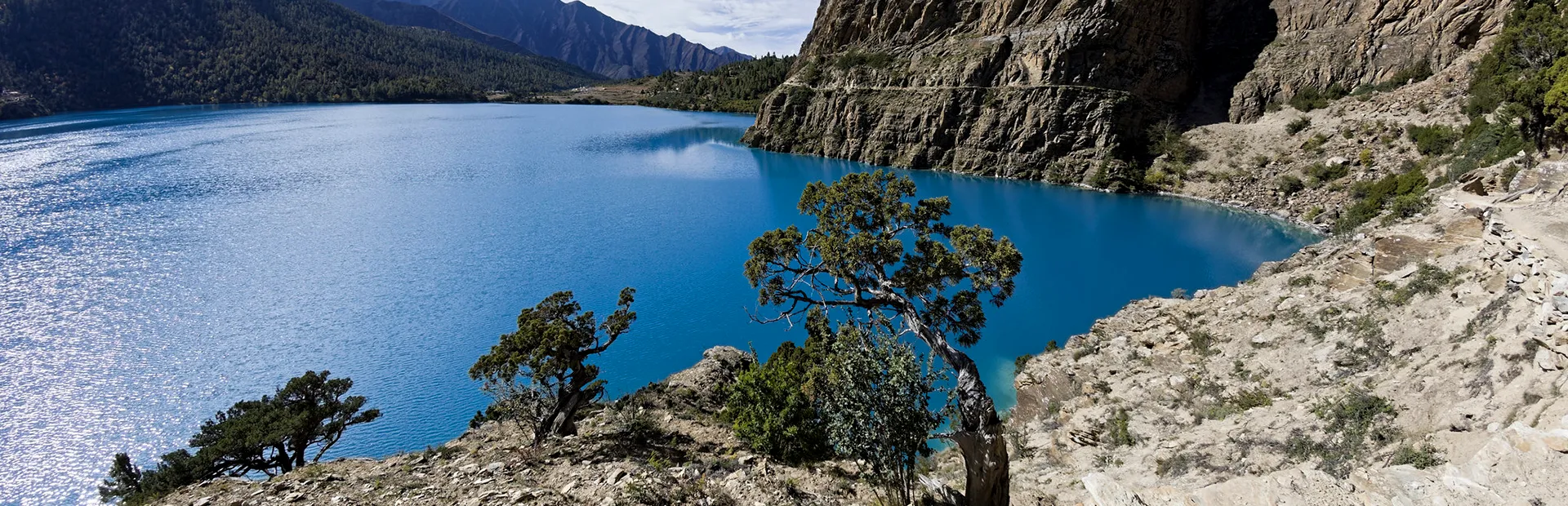
The majestic Phoksundo Lake (3,600m) appears after crossing its last and highest ridge. A breathtaking sight in Nepal emerges from the deep blue lake that reflects against the soaring cliffs. Phoksundo shows its dazzling night sky that makes it an ideal location to observe stars.
People living in the area consider Phoksundo Lake sacred because they think it possesses spiritual abilities. At the campsite next to the lake visitors will find pure tranquility because of the calm water surface and the breathtaking Himalayas that tower overhead.
The Phoksundo Lake demands a single rest day to enable acclimatization steps and geographical discovery. The sunrise illuminates the lake with radiant gold tones which makes its enchanting blue color more visible.
The peaceful environment creates an excellent way to disconnect from urban life. From the path you can gain access to an elevated vantage point that delivers comprehensive views of cliffs and glaciers around the lake. Each increase in height brings greater beauty to the view.
Visitors can also explore the Thashung Monastery where monks maintain Buddhist rituals which have existed for centuries. Both Buddhism and Bon consider the lake and its areas holy which makes your visit to this location both spiritual and historical.
Devote your time to rest while you discover the peaceful atmosphere in the area. Your body benefits from this rest day through adaptation so that future high-altitude climbs become simpler.
Moving away from Phoksundo Lake’s calm shores you pass through an exposed region characterized by rocky surfaces. The rising altitude reveals delightful cold air as you hike up mountain paths which grow thinner.
The path shows growing aridity as exposed cliffs replace the vegetation. The path continues pushing further beyond reach because it wanders through the isolated valley regions of Upper Dolpa.
The trek ends at Sallaghari which has been developed as a 3,600 meter forested campsite. The location features a perfect combination of pine trees together with snow-covered peaks which creates beautiful surroundings where relaxation becomes possible.
The natural sounds and refreshing mountain winds will greet you while you camp at this location. From today onward your expedition will ascend toward elevated terrains because this marks your entry into genuine Dolpa wilderness.
The Upper Dolpa Trek takes us to Nangdala High Camp ranks among the toughest yet most fulfilling days of the trip. A constant uphill trek leads beyond the forests to reach an empty high-altitude ecosystem.
The change in air pressure with elevation makes each movement of your legs progressively harder to perform. The region’s mountains tower more dramatically through the scenic sky because their snowy edges gleam beneath sunlight.
The trail points toward Nangdala High Camp (4,500m) while the terrain transforms into rocky hills with steep slopes. Other campers will find this location to be their final stop prior to attempting Nangdala Pass which remains one of the most demanding elements on the entire trek.
The location of the campsite finds itself at an impressive elevation as it presents amazing views of mountain ridges stretching endlessly across the horizon. The dropping temperatures during nighttime require proper protection along with proper rest because a challenging climb awaits tomorrow.
Continuing the Upper Dolpa trek requires an extremely hard climb that leads up to Nangdala Pass which stands at 5,350m above sea level as the highest point. You will encounter difficulty in breathing coupled with challenging cold winds during this part of the journey.
Anyone who reaches the Nangdala Pass will have the opportunity to see awesome wide views between the Dolpa and Tibetan plateau landscapes. An endless stretch of land reveals itself before your eyes including snow-covered peaks that rise above enormous dry valleys.
The path drops rapidly before traveling into the concealed Shey valley. Old chortens and strips of colorful prayer flags throughout the remote valley create an atmosphere of spirituality.
When you reach Shey Gompa at 4,200 meters you can observe its historic red and white monastery constructed several centuries ago. The area holds great spiritual value to Buddhists who journey from all corners of Nepal to consecrate their pilgrimages.
Spend your time visiting the monastery complex along with exploring the surrounding cliffs to experience the spiritual atmosphere of the place. Upper Dolpa Trek counts this hidden sanctuary as its most mysterious untouched religious landmark.
The path departing from Shey Gompa climbs up a constrained canyon which routes along historic paths. A ruthless terrain features difficult terrain accompanied by imposing wind-sculpted cliffs that reach immense heights.
On your trip, you must overcome Shey La Pass at an elevation of 5,010 meters. The scenery consists of a desolate yet dramatic mix as the Himalayan peaks extend in perpetuity from all perspectives.
The pass descent brings out a transition in the landscape until reaching Namgung Valley. The community sits in a valley among red-faced cliffs and dry mountains which create a dreamlike natural attraction.
A distant Buddhist religious establishment perches at 4,470 meters above sea level atop a mountain slope where it commands views of the valley below. A group of Tibetan monks dwell at the monastery while they maintain the preservation of ancient teachings.
Spend a night in the teahouse along with camping to hear monks conducting their daily evening prayer sessions in Namgung. Namgung maintains an environment of profound peace because of its isolated nature.
A narrow canyon trail beginning at Shey Gompa visits historic pathways towards its destination. Relentless conditions contain challenging rocky areas together with massive wind-shaped cliff formations that tower to remarkable heights.
The path leads you up to Shey La Pass at 5,010 meters altitude. The panorama showcases an abandoned yet splendid mixture of Himalayan mountains continuing endlessly in every direction.
The valley transition becomes visible during the descent from the pass until you arrive at Namgung Valley. A valley in the region surrounds the settlement where dry mountains make natural scenery appear magical.
At 4,470 meters above sea level you will find a remote Buddhist religious establishment built on top of a mountain slope that surveys the valley during its elevation. A Tibetan monk community lives at the religious compound to defend ancient religious knowledge.
The Namgung teahouse accommodates visitors to experience daily evening prayer events conducted by monks during an overnight stay. The monastery at Namgung exists in deep tranquility because it remains distant from other settlements.
During the rest day in Saldang, visitors can discover additional mysteries that exist within Upper Dolpa. The sparse atmosphere and elevated elevation demand proper adjustment for people visiting.
Exploring the hills from Saldang leads hikers to reach Yangjer Gompa (4,800m) which stands among the oldest monasteries in Dolpa. The gradually rising trail provides breathtaking perspectives of the valley scenery behind.
A significant monk community known as Yangjer Gompa exists as a secluded location which keeps ancient manuscripts and holy art along with sacred wall paintings. The Buddhist community of Dolpa considers this location as their vital religious center.
Upon your return to Saldang you will observe the everyday activities of people who live in Dolpa. Traditional Tibetan cultural elements and the stone architecture of the village let visitors experience authentic living from Nepal’s unreachable communities.
Before venturing further into unexplored Dolpa terrain you will stay another night in Saldang.
The Upper Dolpa trek trail departs Saldang toward a historic trading path that Tibetan traders exercised for many centuries as did the people from Dolpa. Both hills and deep valleys accompany the path during this journey.
This dry environment features golden-brown ridged hills that carry small clusters of bushes throughout the land. Walking deeper into the Dolpa region reveals a more remarkable wideness of its stark natural scenery.
Komash represents one of the smallest localities located in extensive uninhabited areas. The few stone and mud houses of the settlement merge perfectly with the demanding environment of this place.
Resident villagers lead harsh lives by relying on cattle and barley cultivation along with the Tibet trade. Under its remote location Komash operates as one of the most autonomous settlements of the Dolpa region.
Living among residents of these high-altitude settlements through local accommodation allows you to immerse yourself in their basic and determined lifestyle.
The path down to Shimen provides continuous mountain scenery where you can see deep gorges and rolling mountain slopes. The descent in altitude triggers better ease in breathing for the traveling individual.
Your path leads you through ridges that begin empty before turning into sporadic green spaces. The mountain slopes release gentle streams that become available sources of clean water.
Shimen (3,800m) lies in a peaceful remote area that contains both a monastery and typical Tibetan architecture in its homes. People living in this part of Tibet maintain basic lifestyles through their domesticated yaks and goats and their farming activities.
Bon Buddhism stands as the dominant religious influence throughout the region since it existed before Tibetan Buddhism. Residents who live in this area worship natural energies together with divine supernatural entities.
The accommodation for tonight will be either a teahouse or camping facilities as you get ready to explore deeper into the concealed areas of Upper Dolpa.
The Upper Dolpa trek through the day advances along a broad river valley offering both level terrains and easy inclines. There are no bounds to the empty spaces in the Dolpa region which foster a strange feeling of complete seclusion.
You will walk over several suspension bridges that let you see passing herds of yaks together with mountain goats. The location reveals endless panoramas of mountain ranges because most areas remain barren and open to view.
Tinje (4,200m) operates as a historic village which had a tiny airstrip utilized for emergency rescues and trade purposes. The old monastery together with prayer wheels and chortens stand as main religious features in this village.
Despite modernity Tinje residents adopt Tibetan traditions by engaging in age-old religious practices while making their living from their environment. Yak Kharka becomes special because the local people demonstrate genuine hospitality toward visitors.
Staying overnight in Tinje allows you to prepare adequately for upcoming distant routes that will reach higher elevations.
Open valleys together with barren hills lead the trail until it passes through occasional pastures where yaks feed. Easy mountain climbing occurs as the trail moves along the river route.
At Yak Kharka (4,250m) local herders utilize these heights as a temporary grazing land to sustain their yaks. The spectacular high-altitude wilderness surrounds this area because of the surrounding mountain ranges.
While camping at this location you get to inhale pure air from the Dolpa mountains and witness their extensive silent scenery. The vast emptiness gets both emotional and elevating at the same time.
A cold temperature prevails during Yak Kharka nights thus requiring adequate warm clothing. A trek on the following day will lead you toward Dho Tarap which stands as the biggest settlement in Upper Dolpa.
The path gently goes down while crossing open valley plains and arid terrain. The territory demonstrates complete wilderness since it lacks all modern human development.
Tokyu (4,150m) stands as a traditional Buddhist settlement that preserves its ancient monasteries along with practicing monks who maintain old religious traditions. The atmosphere is dominated by prayers sung out by the community and the constant rotation of prayer wheels.
The day ends at Dho Tarap which serves as one of the most vital towns in Dolpa while you will spend the night in a modest teahouse before proceeding.
You start moving down toward Dho Tarap since you pass beyond the challenging mountainous regions at high altitudes. The trail crosses barren terrains which lead through small settlements alongside several chorten landmarks.
As altitude drops the surroundings shift from arid lands to become dotted with vegetation. The trek becomes more comfortable because of the refreshing mountain breeze but it demands physical stamina because of its extended length.
Dho Tarap stands as a broad valley which maintains Bon and Buddhist religious traditions side by side. Your observation reveals stone structures among houses combined with typical prayer flags and historical monasteries.
Residents maintain Tibetan ethnic dress and they practice husbandry of yaks or engage in small-scale trading. The community provides a special chance to witness safeguarded cultural practices of the Himalayan region.
The teahouse along with campsites provide an opportunity to unwind after your travelling dedication. The starry night sky above Dho Tarap creates a breathtaking sight where countless stars become visible in the darkness.
The day begins at dawn as you travel along the Tarap Khola river toward its downstream direction. The pathway runs through dense gorges where massive cliffs extend on each side of the path.
Travelers enjoy an exhilarating experience by using wooden bridges that span across the river at multiple locations. Waterfalls of varying sizes descend from stone surfaces as they enhance the natural scenery. During your walk you hear the continuous flow of water alongside you.
The changing altitude makes its effect visible as vegetation appears in the landscape. The walking path becomes lined with trees and shrubs which now cover territories that were completely bare during past days. The distant cliffs provide an excellent opportunity to view blue sheep as they graze.
This long journey becomes easy to traverse because of the peaceful descending path. You arrive at Naworpani during late afternoon where you find this place consists of only basic teahouses. The descending altitude warms the environment thus making nighttime more bearable.
A basic evening meal enables you to rest before continuing the trekking adventure.
The Upper Dolpa trek today uses an established path leading to Tarap Khola. The hiking path runs through areas where pine and rhododendron trees create vibrant scenery.
The combination of fresh surroundings with the gentle slope presents a comforting walking experience. Local villagers greet you with pleasant smiles as you sometimes encounter small residential areas on your path.
You will mostly encounter smooth paths though there are occasional hill sections across the trail course. You stop at beautiful locations to enjoy the serene setting. Wildlife becomes more frequent at this elevation because both birds tweet in the branches and marmots dash through the trail.
You will arrive at Lashicap by afternoon which is located in a valley of the surrounding mountains. The vegetation spreads luxuriously throughout this area while presenting a complete opposite appearance from the drier conditions of previous days.
You spend the night resting provided you have completed your final trekking stages ahead.
The path continues its descent while showing even greater amounts of vegetation. You walk along the river as you make your way by crossing suspension bridges while passing through terraced fields.
People from the village cultivate barley along with potatoes in their agricultural land. Lower altitude temperatures create an environment which allows progression to become less challenging.
The town of Dunai stands as the administrative center for the Dolpa region before you reach it in the distance. Approaching nearer to the region, you start noticing the evidence of modern civilization. Numerous shops and lodging services exist along with limited internet availability.
Town residents show more energetic behavior than when the settlement was entirely cut off from the rest of the world. After checking into a pleasant teahouse you go through the market region.
While you welcome returning to human civilization it is tough to forget the feeling of solitude in the isolated mountains. You complete the day by exchanging tales with other trekkers at dinner before going to sleep.
The last day of your Upper Dolpa trek returns you to Juphal, the place you set off from. The course ascends minimally while going through woods and tiny settlements.
Walking in the morning enables you to experience a cool breeze beneath a clear sky. Your relaxed footsteps match the understanding that this marks the end of your trip.
A basic hotel serves as the only facility in Juphal which resides on top of a hill. Finishing the trek yields synesthetic emotions of happiness with a touch of regretful reflection. You dedicate the afternoon to think about the remarkable experience you have had.
Different hikers approach the end of their expedition by either dining together or spending time alone. Ambience becomes tranquil in this serene evening because you know that you must trade the mountain views for urban life tomorrow.
The withdrawal from mountain life begins with bagging your suitcase while waiting for the departure flight that will bring you home.
A short domestic flight connects Juphal passengers to Nepalgunj ending their experience in remote areas. From the small plane passengers get a spectacular view across extensive mountain ranges and deep valleys. Numerous planes link Juphal with Kathmandu.
The city pulses with excitement after being confined in mountain isolation. The hotel reception allows you to access modern facilities after your reservation. People have the entire night available for exploration or dining or unwinding before the upcoming departure.
Upper Dolpa Trek Nepal reaches its end as you get ready to take your flight back home. During the remaining available time, you choose to either spend your days in local landmarks or explore the shops. The airport journey commences as the vehicle drives away.
The memories of Upper Dolpa stay with you, inspiring future adventures. This trek provides an everlasting experience because of the remarkable landscapes combined with captivating personalities in addition to demanding conditions.
The memories of Nepal accompany you as you carry tales to share with others during the upcoming years.


For Upper Dolpa Trek, it is necessary for trekkers to obtain multiple permits if they wish to access the restricted area.
Trekkers must acquire the Restricted Area Permit (RAP) for an initial price of USD 500 for 10 days which adds a fee of USD 50 for each extra day. In order to access Shey Phoksundo National Park visitors must acquire the National Park Permit for a cost of about USD 30.
The journey requires both a Restricted Area Permit and Shey Phoksundo National Park Permit and potentially the Trekkers’ Information Management System (TIMS) card. The environmental protection measures alongside tourism control derive from these official documents.
To access the restricted zones trekkers need permission from registered local traveling agencies. The regulations forbid independent trekking activity so every participant needs to secure a licensed guide. All necessary documentation enables tourists to experience a convenient and trouble-free travel experience.
Exploration of the Upper Dolpa Trek needs trekkers to possess high endurance levels along with physical prowess. Trekkers need to walk for 6 to 8 hours each day through steep challenging paths that lead through rugged terrains.
Unfortunately the trek becomes more challenging because it requires several high-altitude bus rides that exceed 5000 meters.
Good cardiovascular fitness is essential. The combination of strength training along with hiking exercises creates greater stamina quantities. Trekking experience at altitudes above 5000 meters is helpful although it is not necessary to participate in the Upper Dolpa Trek. Prior to their departure trek participants need to exercise regularly for multiple months.
The prevention of altitude sickness depends on how well trekkers spend their acclimatization days. A constant steady gait combined with hydration enables the tissues to adapt correctly. A well-prepared trek will provide both safety and satisfaction during the journey.
A wide array of ecological elements exists across Upper Dolpa Trek. The forest zones at lower elevations consist of pine, fir and rhododendron trees and above them rest alpine meadows alongside barren mountain slopes. The geographical elevation results in different ecological regions during the climb.
Various species of wildlife inhabit the region together with blue sheep and Himalayan marmots and snow leopards. Both yaks and mountain goats appear regularly in the nearby village areas. The Shey Phoksundo National Park functions as a sanctuary for endangered species to protect the diverse wildlife of the area.
Birdwatchers have the chance to observe the Himalayan griffons as well as Tibetan snowcocks and golden eagles. Wildlife observation in its natural setting presents remarkable chances throughout the Upper Dolpa Trek. The fragile ecosystem benefits from the environment protection practices.
Simple lodging options are available at each stage of the Upper Dolpa Trek. Basic teahouses operate in the lower altitude areas to provide food services and accommodation options. The increase in altitude makes camping essential since there are no available lodgings.
Tourists who choose to trek usually need to transport their tents with them along with essential supplies. Traditional Nepali food consists of dal bhat while Tibetan bread, noodles and soups also constitute the sustenance.
Limited meals exist but sufficient hot dishes enable trekkers to maintain their physical abilities. Carrying extra snacks is recommended.
Purification procedures should be applied to drinking water before using it. Hot drinks like tea and butter tea help with warmth and hydration. The experience of trekking becomes better when people prepare in advance for basic living necessities.
The months of spring and autumn represent the best timing period for visiting the Upper Dolpa Trek. Sunshine prevails during stable weather conditions, which creates ideal conditions for mountain and valley viewing and ancient village observation.
People usually need between 18 to 26 days for the Upper Dolpa Trek depending on the sequence of stops.
Passes that reach high elevation accompany long daily walking through unexplored settlements and wild regions in an expedition that needs appropriate altitude adjustment along with strong physical stamina.
Shey Phoksundo Lake remains the main attraction of Upper Dolpa alongside its untouched Tibetan heritage and historical Shey Gompa monastery and endangered wildlife population which includes snow leopards. Remote implementation makes this one of the most challenging trekking routes in Nepal.
The Upper Dolpa Trek offers an extreme challenge because it reaches elevations above 5000 meters while being located in a remote location along with intensive mountainous terrain. Physical fitness together with trekking experience along with mountain climbing abilities allow people to survive the long walks in harsh climatic zones.
Prior to engaging in the Upper Dolpa Trek, trekkers need to practice exercises for endurance together with strength training followed by gradual hikes that increase in distance.
Moving to Shey Phoksundo National Park requires proper cold-weather apparel and a top-notch sleeping bag together with trekking poles and sturdy boots for staying comfortable and protected.

Need help?
Talk to trip expert