English
 Dutch
Dutch Japanese
 Hindi
Hindi Italian
 Spanish
 French
 German
 Chinese
 Korean
 Arabic
 Hebrew
 Russian
 Portuguese
 Danish
 Czech
Czech Polish
 Swedish
Need help?
 +977 9767994912

Trip Duration
18 Days
Trip Difficulty
Difficult
Max. Altitude
6,189m / 20,305ft.
Activity
Peak Climbing
Destination
Nepal
Group Size
1-16 People Pax
Accommodation
3 star Hotel
Meals
Breakfast, Lunch and Dinner

Need help?
Talk to trip expert
The journey begins in the colourful streets of Kathmandu before moving to the thin air of the Khumbu region. You will follow the legendary Everest trail through rhododendron forests and Sherpa villages like Pangboche, where the oldest monastery in the region stands. After reaching the high pastures of Dingboche, we veer toward the Imja Valley for targeted altitude preparation. The Island Peak Climbing trip concludes with a technical push over a glaciated west face, involving crevasse crossings and a steep snow headwall that leads to a narrow, knife-edge summit.

Welcome to Nepal! Upon your arrival at Tribhuvan International Airport in Kathmandu, our team will meet you and transfer you to your hotel. You can rest, relax, and stroll around the vibrant streets of Thamel in the evening.
Today, you will meet your climbing guide for a detailed trip briefing. We will double-check all your trekking and climbing gear to ensure you have everything needed for the Island Peak climb. While we finalise your climbing permits, you can spend the rest of the day exploring Kathmandu or picking up any missing equipment in Thamel.
We take an early morning scenic flight to Lukla, the gateway to the Everest region. After meeting our local porter team in Lukla, we begin our trek towards Phakding. The trail gradually descends alongside the Dudh Koshi River, passing small Sherpa settlements and prayer flags.
Today’s trek leads through pine forests, crossing several suspension bridges over the Dudh Koshi River, including the famous Hillary Suspension Bridge. After a steady uphill climb through the forest, we reach Namche Bazaar, the bustling Sherpa capital of the Khumbu region.
To adjust to the higher altitude, we spend an extra day in Namche. We hike up to the Everest View Hotel for magnificent panoramic views of Mount Everest, Lhotse, Ama Dablam, and Thamserku. On the way back, we can visit the local Sherpa Culture Museum and photo gallery before resting for the afternoon.
The trail offers scenic ridge walks before descending to Phunki Tenga for lunch. From there, we ascend through rhododendron forests to reach Tengboche. Here, we visit the famous Tengboche Monastery, the largest monastery in the Khumbu region, set against the backdrop of Ama Dablam.
We descend through forests to Pangboche and continue walking past stone walls and alpine pastures toward the Imja Valley. Crossing the Imja Khola, we hike up to Dingboche, a beautiful village surrounded by stone-walled fields to protect crops from cold winds.
Today is a short, pleasant walk to Chhukung Valley. As we head deeper into the Imja Valley, the dramatic south face of Lhotse looms ahead, and Ama Dablam appears from a different angle. We reach Chhukung by lunchtime, giving us plenty of time to rest and prepare for tomorrow’s acclimatisation climb.
We hike up Chhukung Ri, a rocky peak overlooking the valley. Reaching this altitude helps your body adjust extremely well before heading to Island Peak Base Camp. From the summit, you get sweeping views of Imja Tse (Island Peak), Lhotse, Makalu, and Nuptse. We descend back to Chhukung for the night.
Leaving Chhukung, we walk along the steep glacial moraine toward Pareshaya Gyab, commonly known as Island Peak Base Camp. Upon arrival, our crew sets up tents and prepares hot meals. We spend the afternoon resting and enjoying the remote high-mountain scenery.
Our climbing guide conducts a hands-on training session today. You will practice using crampons, harnesses, ice axes, and fixed-rope techniques to ensure you feel confident for the summit push. The rest of the day is spent resting and packing gear.
To increase our summit success rate and shorten summit day, we move up to High Camp. The trail ascends a narrow rocky channel. Once at High Camp, we rest early, hydrate, and prepare our climbing gear for a very early morning start.
We wake up around midnight and begin our climb up the rocky ridge before stepping onto the narrow glacier. Using fixed ropes, we navigate the final headwall to reach the narrow summit ridge of Island Peak (6,189m). Enjoy breathtaking 360-degree Himalayan views before carefully descending back to High Camp, Base Camp, and continuing all the way down to Chhukung.
At a lower altitude and with higher oxygen levels, walking feels much easier today. We trace our steps back down through the Imja Valley, passing Dingboche and settling into the peaceful village of Pangboche for the night.
We continue our descent through Tengboche, walking down through forests and across suspension bridges to reach Namche Bazaar. Enjoy a hot shower, good food, and celebrate your successful summit with fellow team members.
Our last day of trekking takes us down the steep trail alongside the Dudh Koshi River back to Lukla. It is a time to relax, thank our local Sherpa team and porters, and celebrate the end of a memorable mountain journey.
We catch an early flight back to Kathmandu. Upon arrival, you will be transferred to your hotel. You can spend the rest of the day relaxing, enjoying a massage, or shopping for souvenirs in Thamel.
Your Island Peak Climbing adventure comes to an end today. According to your flight schedule, our representative will transfer you to Tribhuvan International Airport for your flight home.

Important Itinerary Notes: About Island Peak Climbing
• • Altitude & Safety: Proper acclimatisation is crucial for high-altitude peak climbing. If you show severe symptoms of altitude sickness (AMS), the guide may decide to pause or descend for your health and safety.


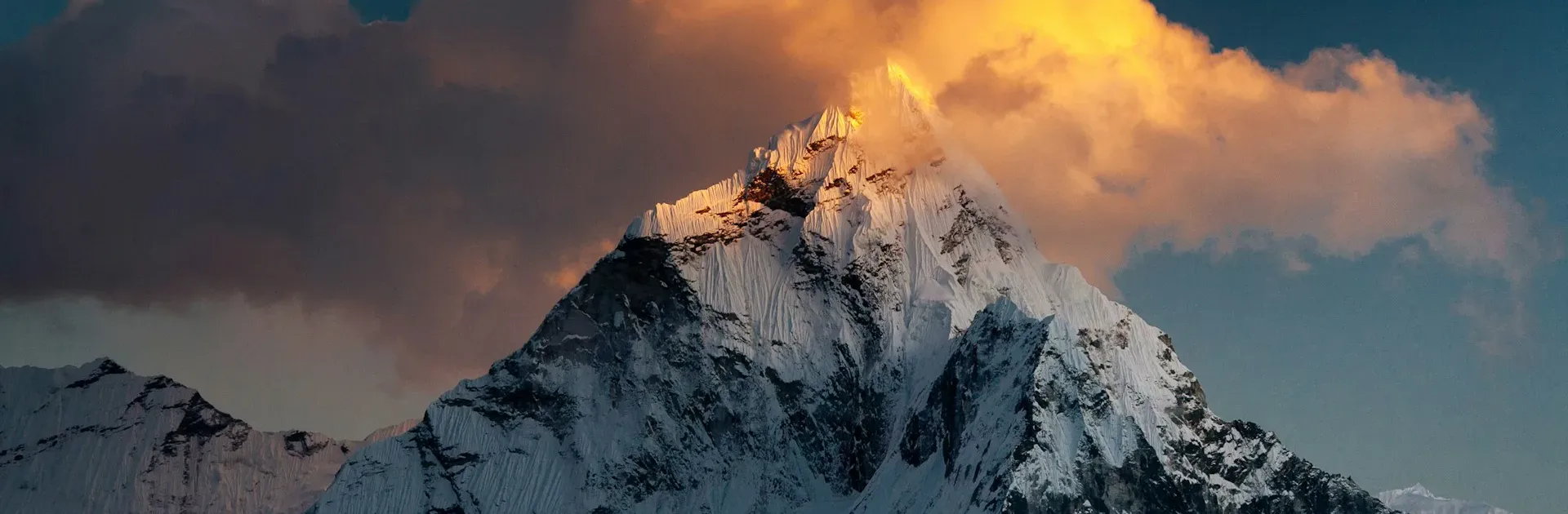
Rising from the heart of the Chhukung Valley, Island Peak climbing (6,189m/20,305ft) serves as the perfect gateway for trekkers aspiring to become true mountaineers. Known locally as Imja Tse, this peak offers an unparalleled view of the Lhotse face and the frozen waves of the Khumbu glacier. Our expedition is not just a climb; it is a comprehensive alpine masterclass designed to take you from the trails of the Everest region to the sharp, exhilarating summit ridge of a Himalayan giant.
We go beyond the standard itinerary by integrating a High Camp (5,600m) strategy and a dedicated pre-climb training clinic at base camp. While many companies rush the summit from a lower elevation, we prioritise your safety and success by utilising IFMGA-certified guides and providing premium logistical support. To ensure your recovery is as memorable as the ascent, we include post-climb luxuries like a professional trekker’s massage and a celebratory farewell dinner in Kathmandu.
The Island Peak Climbing is tailored for adventurous spirits who have a background in high-altitude trekking and wish to gain their first summit above 6,000 meters. It is the ideal “next step” for those who have completed treks like Everest Base Camp or the Annapurna Circuit and want to learn the fundamentals of rope work and crampon use in a high-consequence environment.
You should be in peak physical condition, capable of walking 6 to 8 hours daily with a weighted daypack. We recommend a training regimen starting four months prior, focusing on uphill endurance, cardiovascular health, and leg strength. The summit day is a 10–12 hour gruelling effort that demands mental fortitude and physical stamina.
While technical mountaineering expertise is not a prerequisite, we provide a mandatory pre-climb briefing and training session at Base Camp to ensure you are comfortable with your gear. Having previous experience at altitudes above 5,000 meters is strongly advised to ensure your body responds well to the thinning air.
The Island Peak climbing is officially graded as PD+ (Peu Difficile+) on the Alpine scale. This means it is physically very demanding and involves moderate technical challenges like glacier travel and a steep headwall, but it does not require the advanced rock-climbing skills found on 7,000m peaks.
Our “safety-first” schedule includes two nights in Namche Bazaar (3,440m) and two nights in Chhukung (4,730m). The cornerstone of our preparation is the ascent of Chhukung Ri (5,546m), which triggers the necessary physiological changes for a successful 6,000-meter summit push.
The summit push begins at 1:00 AM under a canopy of stars. After a steep rock scramble to the “crampon point,” we transition to the glacier. Roped together for safety, we navigate around crevasses and cross small ladders before reaching the base of the headwall. Using a jumar (ascender) on fixed ropes, you will climb a 45-degree snow slope that leads to the sharp, exhilarating summit ridge. The view from the top—surrounded by Lhotse, Nuptse, and the giant face of Makalu—is the ultimate reward of the Island Peak climb.
Safety is integrated into every level of our operation. Our guides carry satellite communication devices and pulse oximeters to monitor blood oxygen levels daily. We maintain a standby helicopter evacuation service and carry medical-grade oxygen for emergency use.
Acute Mountain Sickness (AMS) can affect anyone above 3,000m. Our guides are trained to identify early symptoms like persistent headaches and nausea. If symptoms do not improve with rest and hydration, we initiate immediate descent protocols to lower elevations.
We provide high-quality communal technical gear:
You are responsible for your personal technical kit, which can also be rented in Kathmandu:
All internal transfers are included, featuring private airport pickups and the round-trip flight between Kathmandu (or Ramechhap) and Lukla.
We take care of all the complex paperwork, including:
We offer guaranteed departures every week throughout the peak Spring and Autumn windows.
Private expeditions are available for groups of two or more, allowing for a personalised pace and flexible start dates.
Ask about adding Everest Base Camp or the Gokyo Lakes to your itinerary for a longer Himalayan odyssey.
We hire only local staff from the Khumbu and Makalu regions, ensuring that the financial benefits of your climb support the Himalayan communities directly.
We strictly follow “Leave No Trace” ethics. All garbage and human waste from our camps are carried back to designated disposal points in the lower valley.
For Island Peak climbing, mandatory insurance must include high-altitude mountaineering (up to 6,500m) and emergency helicopter rescue.
Cancellations 45 days prior receive a full refund minus the deposit. Within 30 days, 50% is forfeited, and within 14 days, the trip is non-refundable.
Your safety is managed by a licensed Sherpa Climbing Guide (1 guide per 3 clients) and a support team of porters who carry 15kg of your personal gear. Our team is fully insured and compensated fairly according to local labour standards.
Standing on the summit of Island Peak is more than a trophy; it is a transformative experience that builds the confidence and skills needed for the world’s highest peaks. With the right preparation and our elite Sherpa team, the summit is within your reach.
Secure your legacy in the Himalayas. Contact Sherpa Discovery Treks today to begin your journey to 6,189 meters. Book Now for Island Peak climbing
No prior mountaineering experience is necessary, but you should have done high-altitude treks before (like Everest Base Camp or Annapurna Circuit). Before you attempt the summit, our guides will run a practical pre-climb training session at Base Camp or Chhukung. They will teach you how to use your harness, crampons, ice axe, jumar, and fixed ropes so you feel confident on the mountain.
Island Peak climbing (6,189m) is physically tough and requires a good level of fitness, but it is not a highly technical mountain. You don’t need to be an expert climber, but you should be able to walk 6–8 hours a day on rugged terrain. The hardest part is summit day, which takes around 10 to 12 hours. You will use crampons, fixed ropes, and ladders to cross crevasses and climb a steep snow wall before reaching the summit. Previous trekking experience at high altitudes helps a lot.
For medical emergencies only.
Often -15°C or lower.
We build our itineraries with a slow and steady pace to give your body time to adapt to the thin air. Our route includes extra rest and acclimatisation days in Namche Bazaar and Chhukung, along with an acclimatisation climb up Chhukung Ri (5,546m). Our guides also check your blood oxygen levels daily with a pulse oximeter and carry emergency oxygen tanks and first-aid kits at all times.

Need help?
Talk to trip expert